Showing posts with label LSD. Show all posts

Tuesday, 25 June 2019

Psychedelic Morality and Cultural Inversion


For more posts on occult symbolism, click hereFor an intro to the Band see the featured post to the right or check out the archive

Other links: The Band on Gab


A theme that keeps coming up in these occult posts is how to figure out what exactly is occult. One of the rewarding things about the Band is the freedom to look at larger patterns - to see what's going on behind the scenes and untangle the complexity and deception that makes judgment difficult. Specific things can be ambiguous, but if we understand the underlying assumptions we can determine the moral direction. The psychedelic occult is a pretty narrow moment in modern culture, but it brings together patterns that are easy to spot elsewhere.



The point is not to tell people what to like - moral perfection is impossible in this world and the Band lacks the authority and desire for that responsibility. The goal is to approach reality as truthfully as possible, and that means cutting through the lies and inversions that have alienated us from reality - nature and culture. Cool colors don't change the fundamental question of what can we know and how can we know it: observations of the real world and the logical reasoning to assess the connections. Empiricism and logos to guide your own judgment. 

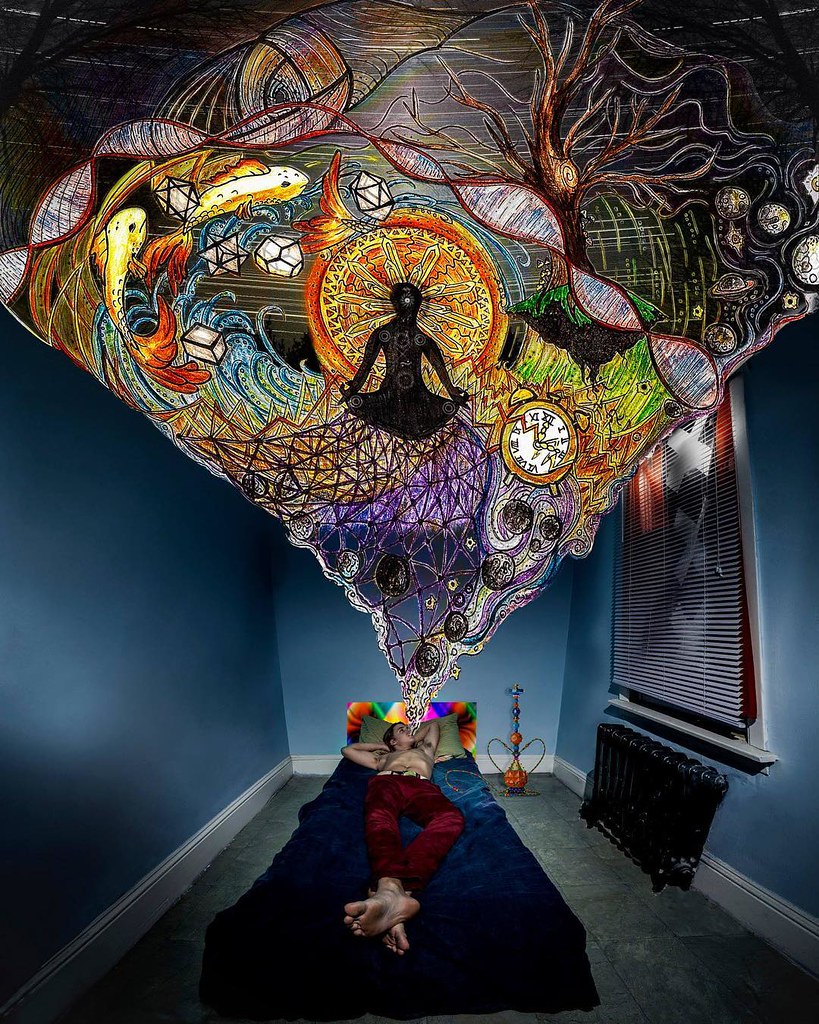
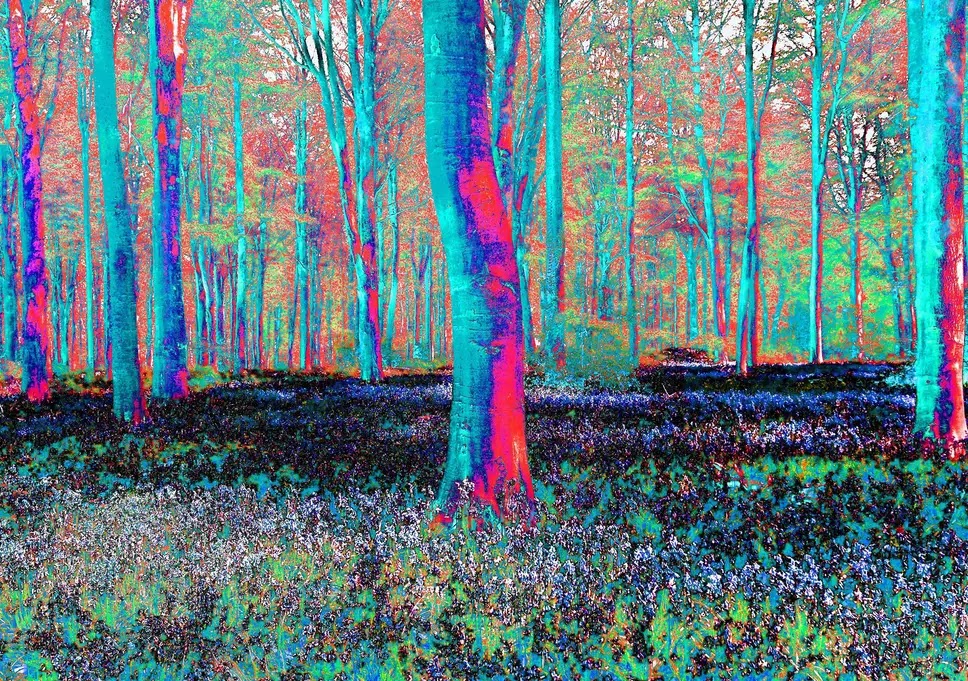
This requires personal moral responsibility and can be uncertain.But it is also self-correcting and is the only way to make sense in a world of personal interest and endless deception. Photo source.


When you can do this, you don't need to follow moral "leaders". 

We need guides and influences, but moral reasoning is the opposite of blind following. 


The first two posts start broadly then narrowed in. Looking at the problems with defining and identifying the occult showed that the meaning depends on your larger set of beliefs. So the occult is as diverse as the viewpoints of the people using the symbols. The most we can say these share is that they are all negative concepts - they all oppose aspects of traditional Western culture. But even this is splintered because different people invert different things. Some are anti-Christian, some anti-logic, some anti-human, etc. and these can mix-and-match in any number of ways. So the only way to approach this in anything close to a rational way is to look at the outcomes - the fruits - and the patterns that they trace.
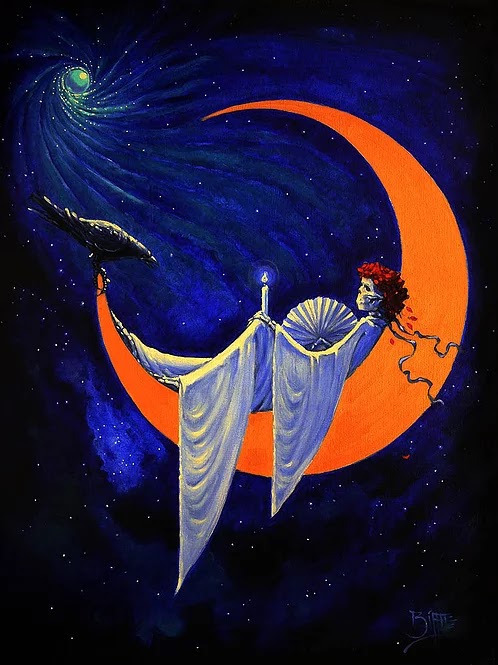


Richard Biffle, Counting Stars by Candlelight, print

Part of the artist's Terrapin Suite, based on the Grateful Dead song Terrapin Station. The prevalence of traditional occult images in psychedelia is one of those observed patterns that suggests a connection that may not be obvious on the surface. Not so much "hidden secrets" as a common attitude towards truth or morality. 

The Band uses imagery from Terrapin Station - it is an evocative song and a tremendous example of the wizardry of lyricist Robert Hunter. 


If we consider attitudes to psychedelic use, some simple categories are visible. Realists take the perspective that a hallucinogenic experience is an artificial, chemically-induced state with predictable characteristics based on metabolic and neuro-chemical processes. Secular transcendentalists are the people that believe that the chemical opens a path to "higher" truths. The names were made up by the Band and are less important that the concepts that they label.
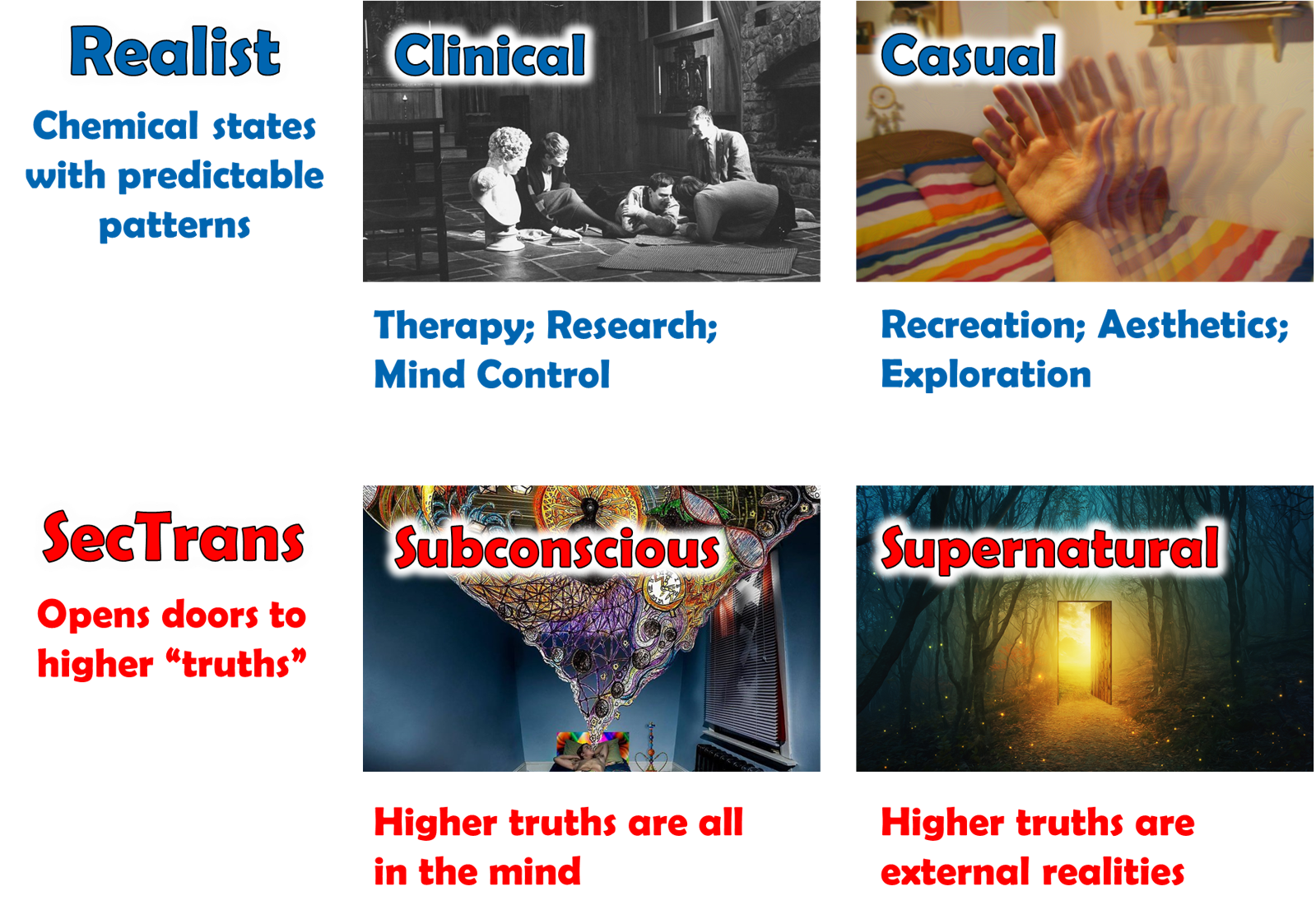


Realists don't offer much insight into occult patterns because they view the experience as a bio-chemical process like being drunk or stoned. Casual users are the vast majority - all the personal reasons someone chooses to trip. The clinical category is made up of all the "experts" looking to use the effects for some purpose.


Wes Wilson, poster for Love and Everpresent Fullness show at the Fillmore Auditorium, San Francisco, August 5-6 1966  

Casual users make up the mass market for psychedelia. Their reasons for tripping are mainly aesthetic - they enjoy the experience for whatever reason - and they are drawn to music and images that look or sound interesting or cool. Any occult message is incidental to the sensory and cognitive effects, and many of these users get put off by excessive supernaturalism. 

But this leaves them oblivious to the nature of the people producing the psychedelia. It's the perpetual problem of people projecting their own beliefs and good natures onto strangers. The counterculture was built off this. 
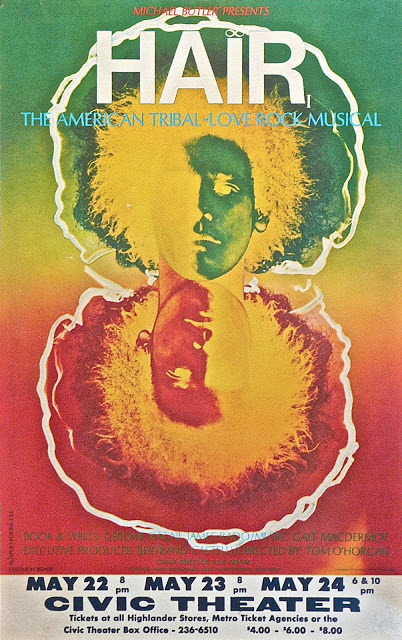


1968 Poster for Hair, the musical

A base of support funds the producers and normalizes the message. If it becomes "cool" you have a movement. And all the moral inversion and dyscivic patterns baked into it come along like Greeks in the Trojan Horse.


Secular transcendentalist is a mouthful of a name, so we'll shorten it to Trans People SecTrans. It's important to remember that this brand of inversion believes that metaphysical transcendent things are found in a material, finite, secular world - like pretending a drug haze is "higher" truth. Keeping a syllable from each reminds of how absurd this "thinking" really is. A secular world containing transcendence is like a finite bucket holding infinite water. It is so self-evidently retarded that it can't be explained further. It's like a litmus test.

Visualize. Realists are realists because they accept reality. The "trip" is the consequence of introducing a predictable psychoactive agent to a somewhat unpredictable individual consciousness.
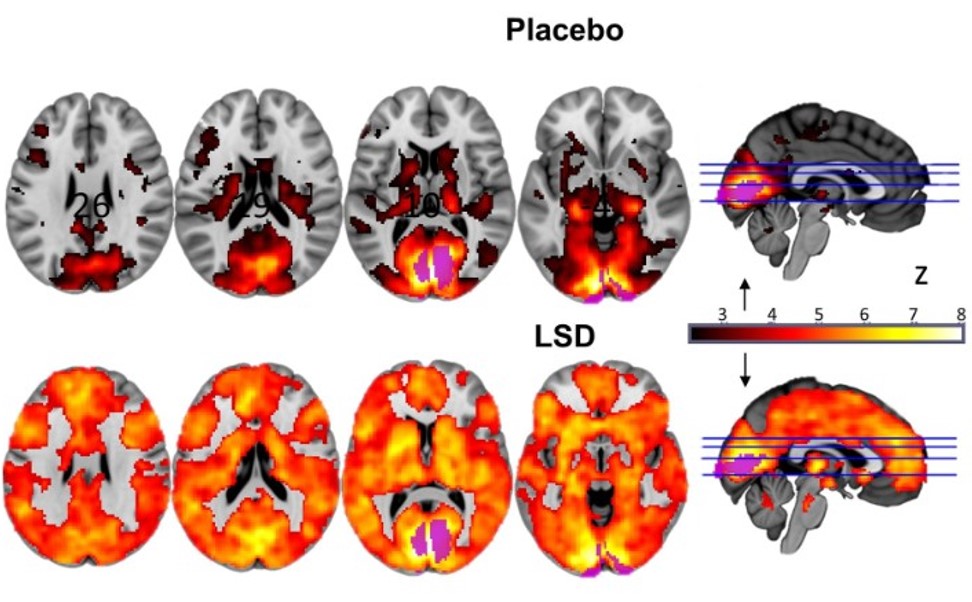


Twenty volunteers' fMRI scans on either LSD or a placebo. Normally sight data is processed in the visual cortex at the back of the brain. On acid, much more of the brain is involved when processing the same visual data. This is like synesthesia, only is if multiple response centers activated at once. The shifting visuals like visual drift and tracers also make sense. 


The predictable consequences change the appearance of the world. Picture source. Note that it doesn't change the world. Where some get misled is in assuming that what we see normally "is" the real world in itself. It isn't. What we "see" is an internal translation of optical data carried to the visual cortex. If other parts of the brain take part, then the translation will "look" different. But it is the same world.



Visual drift and synesthesia may make the space between solid objects appear to be filled with fuzzy energy, but the objects remain solid. And you can still walk between them and feel nothing. It is exactly the same external world. 

The only lesson is that there is a gap between reality in itself and experience. For some this is startling, but it is not a new insight. Nor does it tell us anything about that real world. What it does do is give us a new set of clouds to find faces in.
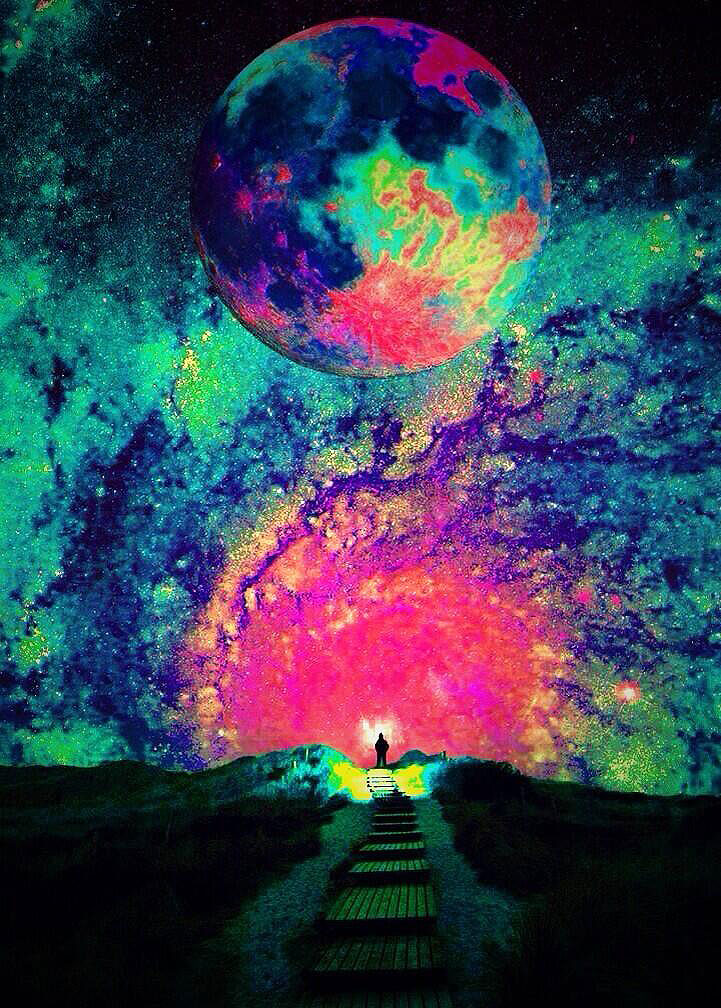


If you believe that what you see is exactly what's there, changing perception makes you think you are seeing something real that was previously unnoticed. 

It literally boils down to 'the light looks more meaningful'. But in a demoralized world, people can sense that there is more to reality to our material experience but have no rational path to spirituality. There is no logos, no logical analysis of supernatural things because the very idea is excluded from any sort of official "serious" conversation. So when someone charismatic for any reason says the new perceptions really are real...


Psychedelic spirituality boils down to inversion and projection. The world is the objective. Perception is subjective. Start with the inversion that one is the other and whatever subjective way that you imagine the supernatural is projected onto the hallucinogenic experience. In short, the shapes you see in the clouds depends on you. Like the world seen differently vs. a trippy tarot card filled with stock occult symbolism. Note: the lobster is in the original.
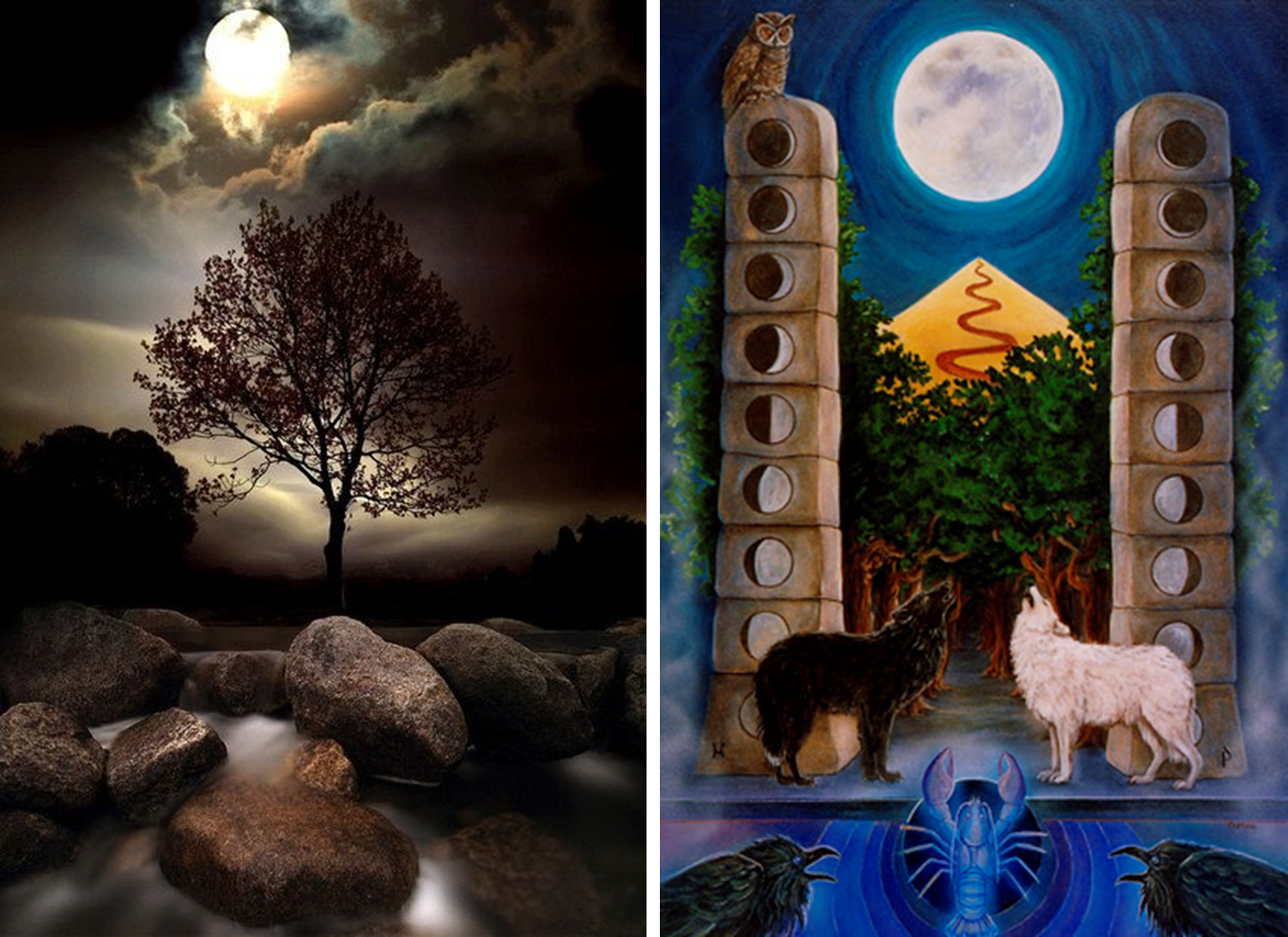


The spray of symbols is important because it creates the illusion of meaning. By pretending to have this secret symbolic knowledge, the "guru" avoids having to present a rational account of their fake metaphysics. Look at the ravens and the balance! Follow me into the light! But it's all rhetoric.
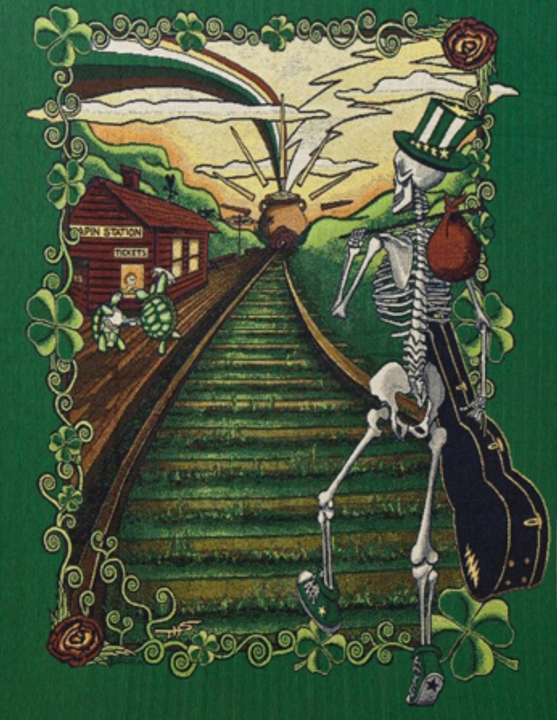


There's never an empirical or logical reason to believe they have a clue what the light is or where their path is going. 


This is where we pick up another thread of a pattern in an earlier occult post - the demoralization and inversion of modern mass media culture. In that case, we were looking at television, movies, and comic books, but it is the same process. Demoralization comes first - Christian American morality is removed from popular culture. This goes under the radar for what looks like absurdly flimsy reasons in hindsight - traditional values were just assumed in a purely secular context, and people were bedazzled with stuff. Then once morality is based on purely material wants and opinions, whatever occupies the center of centralized mass culture can redefine and invert it however it wants.
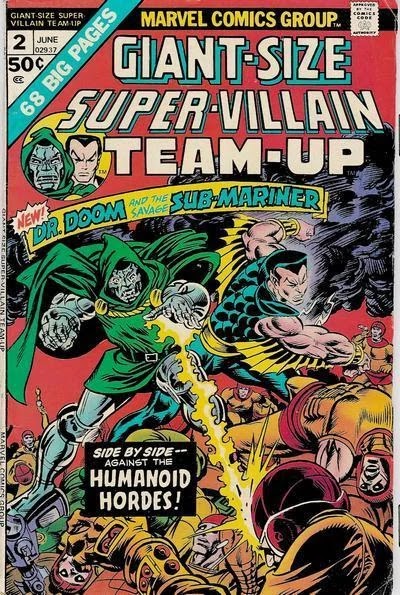


Giant-Size Super-Villain Team-Up #2, cover by Gil Kane, June, 1975, Marvel Comics

The illusion isn't the world - the illusion is the mass mediated, institutional, official narrative of 'how things are'. Notice how the ability to manufacture a "mainstream" directly correlates to how centralized media is. The earlier post pointed out one problem - that materialist mass culture is unheroic. 

This gave us the anti-hero as the rational reaction to a fake reality. This is important, but not the only problem. Though battling "the humanoid hordes" may be predictive.


Materialist mass culture is metaphysically empty. It is strive to consume in an unheroic way until you die. That's it. But simple observation shows us that humans have an innate desire for deeper understanding. This is where the all-pervasiveness of official culture comes in - the flattened, demoralized vision of reality is pushed everywhere. Traditionally, American Christianity met this yearning with a broad spiritual dimension of limitless complexity and appealing simplicity. But the demoralization was so thorough that is became increasingly difficult to even consider Christian perspectives without inviting ridicule. So where does the savvy, sophisticated, not trusting anyone over 30, modern child of year zero go?


George Caleb Bingham, Stump Speaking, 1853-54, oil on canvas, Saint Louis Art Museum

American culture developed organically over time. It builds out from personal virtue, through family, to society. The only defense of democracy assumes this perspective - that moral, family-oriented people will select leaders that reflect their values. There was no mechanism to deal with weaponized rhetoric through centralized media and institutions. 
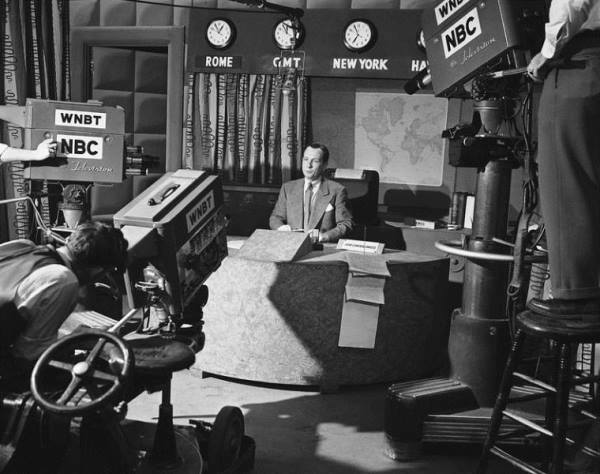


Mass-media creates a demoralized illusion - a husk - of this. Quietly subverting the traditions and banishing Christian American morality altogether. 

But the "news" is deceptive, the "heroes" aren't real...
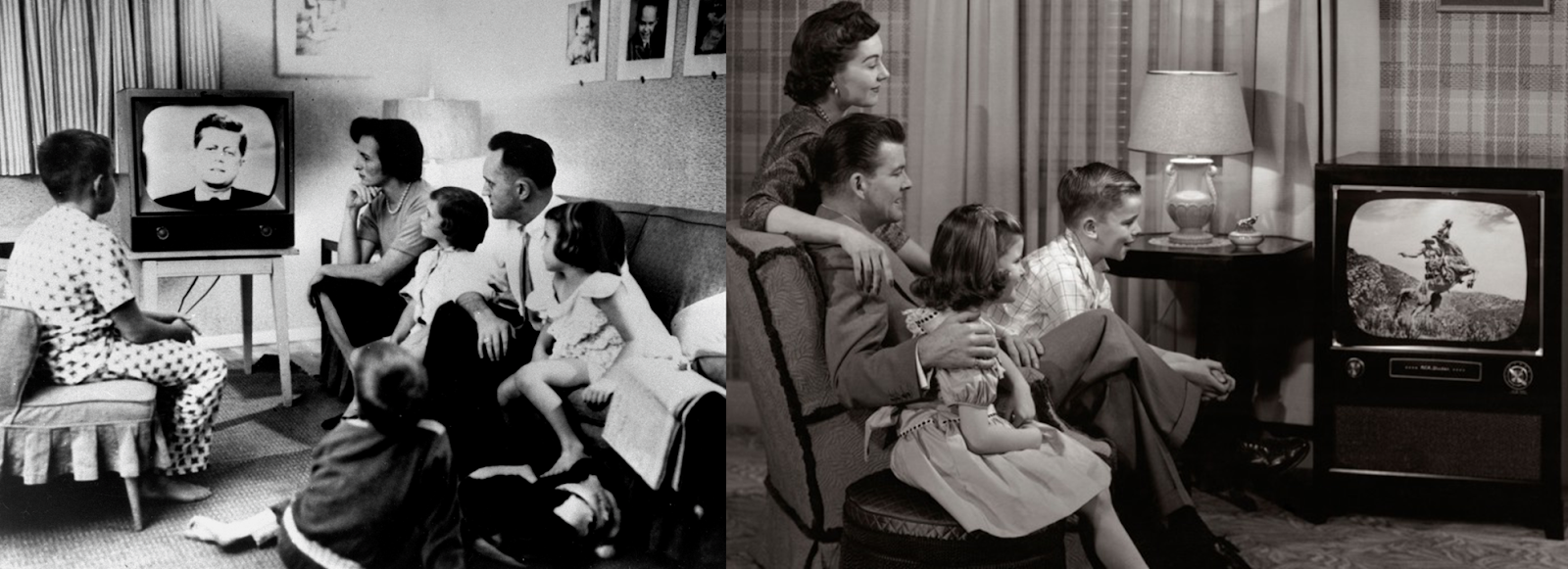


Counterculture spirituality follows the same pattern as counterculture politics - it reacts against the soul-numbing illusion with a different illusion. There is no substance in the official culture - just hollow echoes of organic culture, so the rebellion is also symbolic. Taking up anything that suggests immorality or esoterica, but also in traditional terms. Alternative interpretations and "spiritualities". Anything that isn't the fake media interpretation of traditional American culture. But the media is very adaptable, marketing the "alternatives" back to the couch-sitters as rebellion.

Which brings us to a particularly annoying boomertype, the "spiritual seeker".
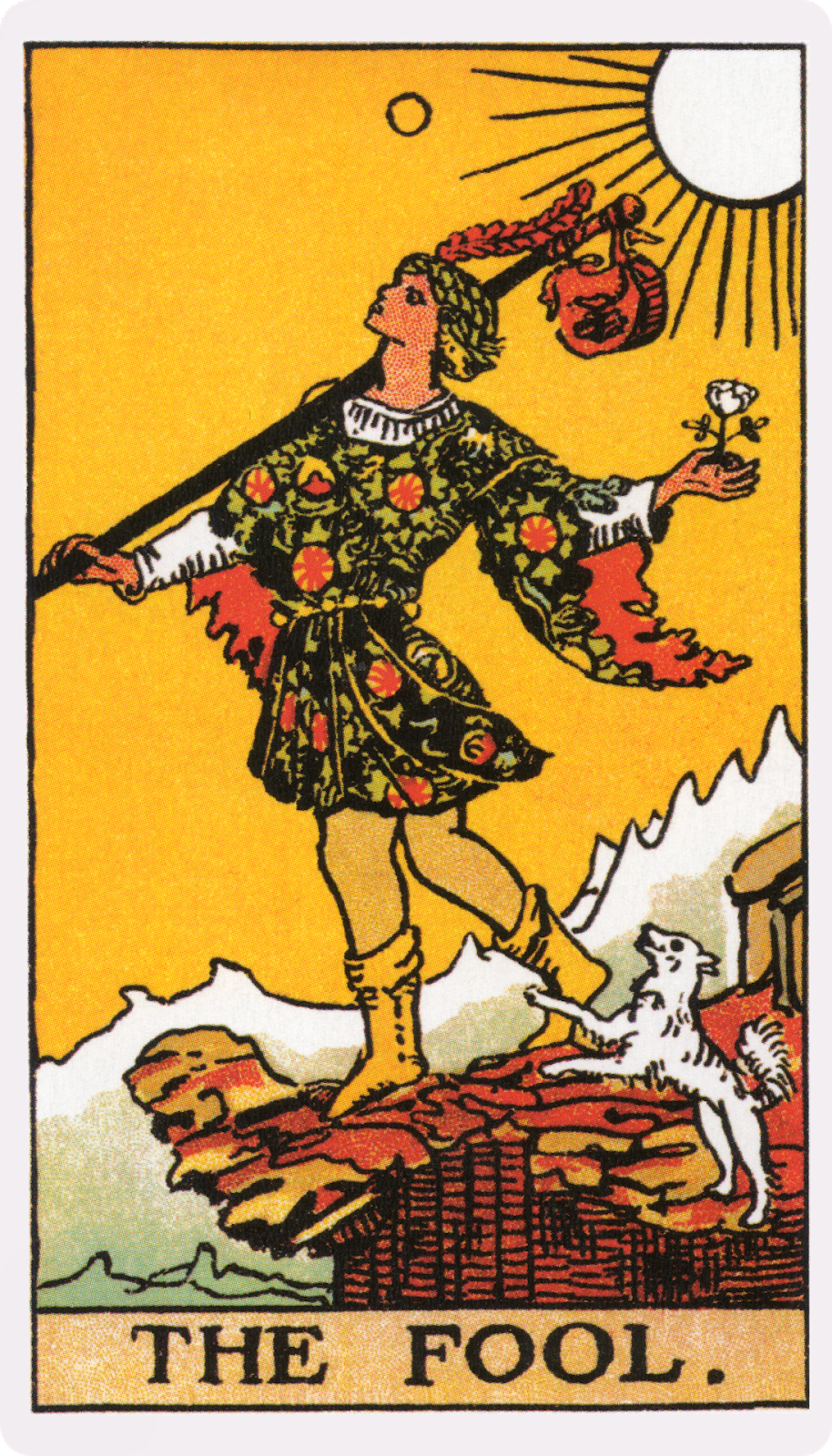


Pamela Colman Smith, The Fool, from the Rider-Waite tarot deck, 1909

It is important to be clear. The Band is not referring to people who are sincerely working through spiritual questions. Those are real seekers. This is the faux pop-culture version that keeps crystal shops and Deepak Chopra afloat.The basic formula is: 

a) have no coherent sense of the supernatural, but
b) believe that there is higher wisdom "out there", but
c) these truths are unknown to the mainstream, but
d) you're can find them with minimal effort. 

A few readings or videos and some "reflection" and you can claim to be more enlightened than the herd. It really is the gamma religion - the catechism of the low-energy secret king. 


This is the basis of the psychedelic occult - that drugs are an effortless shortcut to the magic powers of the subconscious that took traditional mystics a lifetime of effort to unlock.


Our diagram split SecTrans into those who think the truths are purely psychological and those who believe the drugs provide revelations into external realities. There is a lot of overlap - the Jungian path that depths of the subconscious opens into the metaphysical. So the division is more conceptual than a hard and fast rule.


What makes it blurry is that Subconsciousists believe all non-rational processes are "psychological". They all stem from the same source in the subconscious mind, regardless of where they actually come from. It's like a religious belief if there was a religion that you made up - we could call it Psychologism. Then others like Jung agree that there are deeper truths hidden in the subconscious, but they are more than personal insights. Here we can be contacted by supernatural entities and understand external reality more truthfully. Reality gets rewritten accordingly.
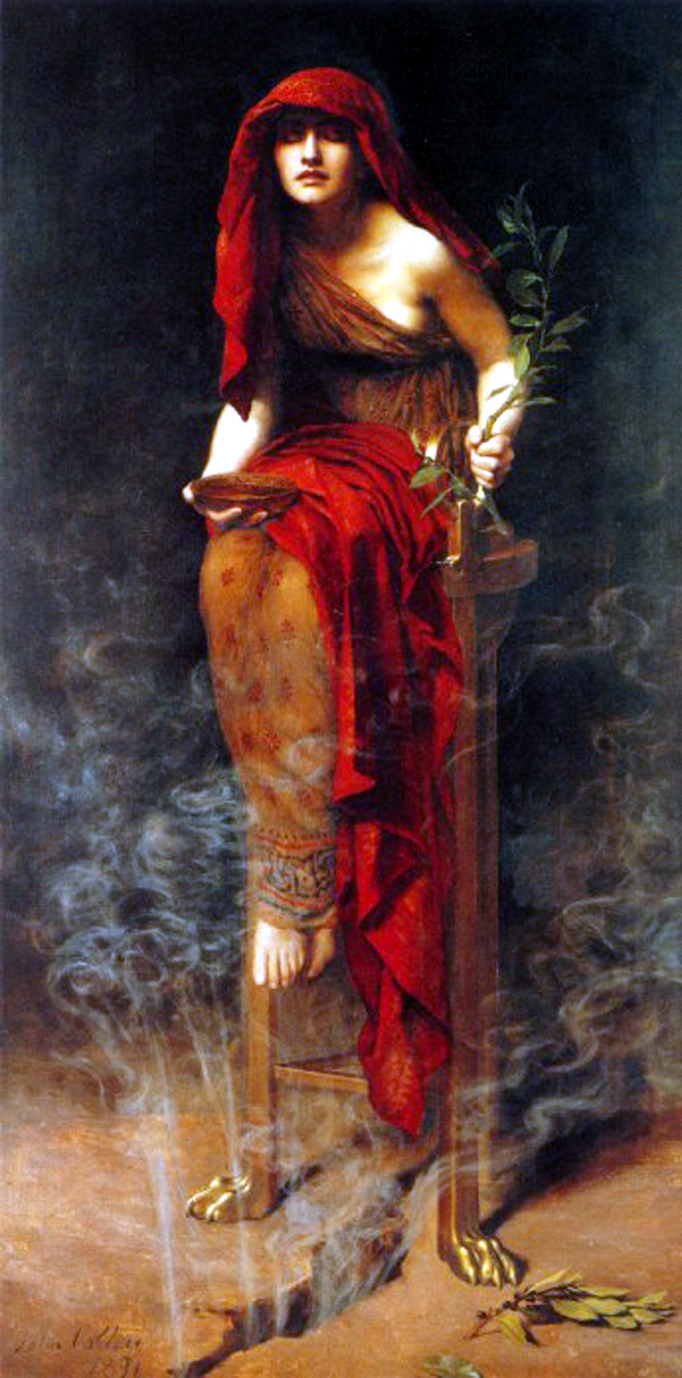


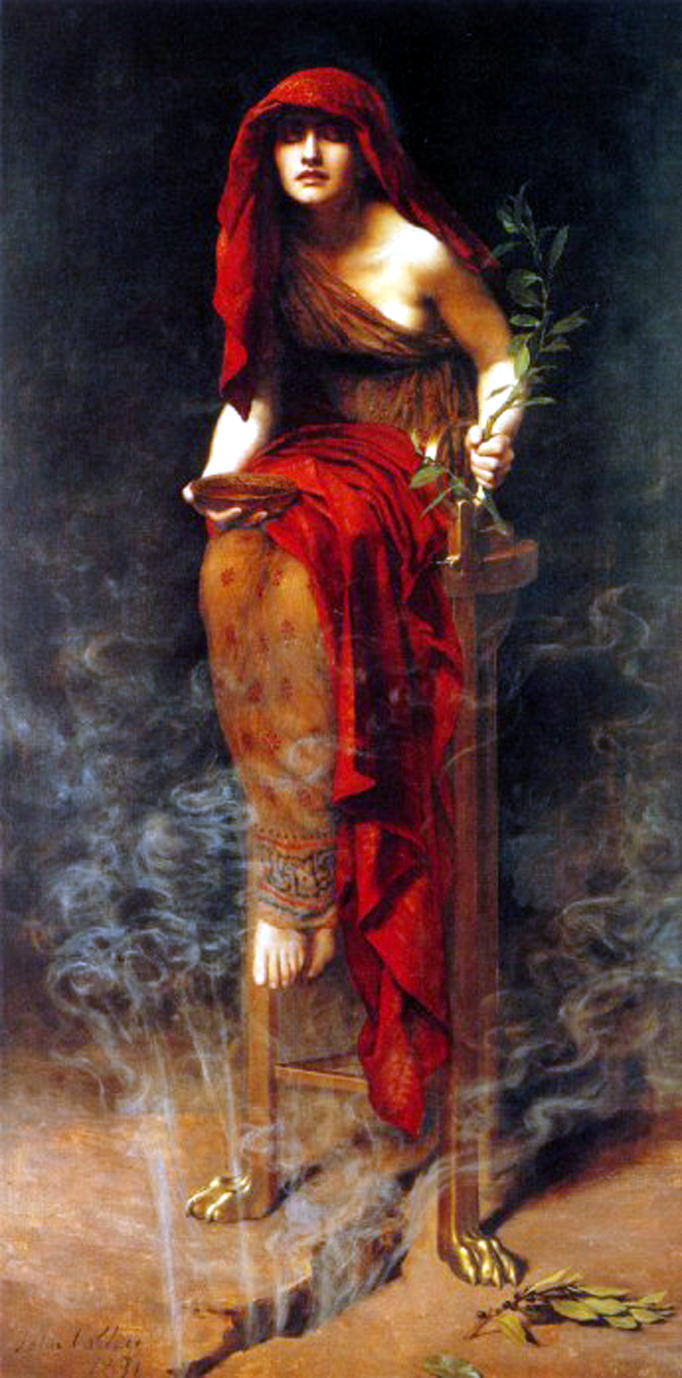
Remember the Oracle? Psychedelicists "explain" her prophetic state as induced by the vapors she was reported to breathe. It's the different explanations that make it complicated.

A realist says she's tripping - seeing her visions as chemically-induced hallucinations. The interpretations come from shifty priests who are good at coming up with fortune-teller type statements that sound profound but can be taken different ways. 

A SecTrans subconsciousist would say that there are deeper insights because drugs open unconscious pathways that can exceed the powers of the conscious mind. 

A SecTrans supernaturalist believes the supernatural is real. The drugs allow the connection. 

It's isn't this cut and dried, but it does give a sense for why it is hard to pin down.


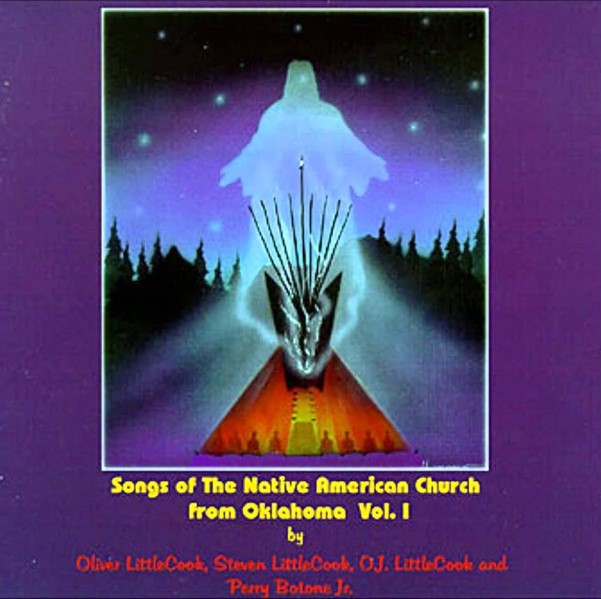
There is a small subset of occult history focusing on entheogens, defined as a "chemical substance used in a religious, shamanic, or spiritual context". The problem with this is the problem with a lot of pre-Columbian American history and "spirituality" - the cultures were oral and the devastation so complete that there is no way to know what they actually believed.



Consider the Native American Church, also known as the Peyote religion or Peyotism. There is evidence of peyote use in pre-Columbian South America, but the ritual consumption only made it to North America in the mid-19th century. The Church itself was incorporated in 1918 and includes elements of Protestant Christianity.

The believers may be sincere, but the specific rituals can only be loosely based on ancient practices


But Peyotism does have a consistent, if loose, set of beliefs about the supernatural. Even the connection between ethnicity and spirituality is a form of dogmatic consistency. Joining it means committing to a preset belief system.


On the other hand, we have the psychedelic occult in the form of SecTrans supernaturalism.



Fake history meets the occult with Mushroomism, also known as the  Idiot Mushroom Cult. Here we see a dogged group of persistent but intellectually-limited "researchers" trip into the notion that mind-altering substances were the secret cause of all human religiosity. 


If you're actually interested in this drivel, here is a link to one "scholar". This hack puts a lot of weight on the stylized trees in Medieval manuscripts resembling hallucinogenic mushrooms. He even includes lots of mushroom photos to somehow make the case. There is no irony in the tone - he actually seems to believe it is a mike drop moment, and not a thought that might drift by while on mushrooms. There are actually only three possibilities for a claim this retarded:

1. He is so stupid that the even the inkling of the notion that representational systems were conventionalized and that these images aren't communicating by mimetic resemblance never flickered across his mind.
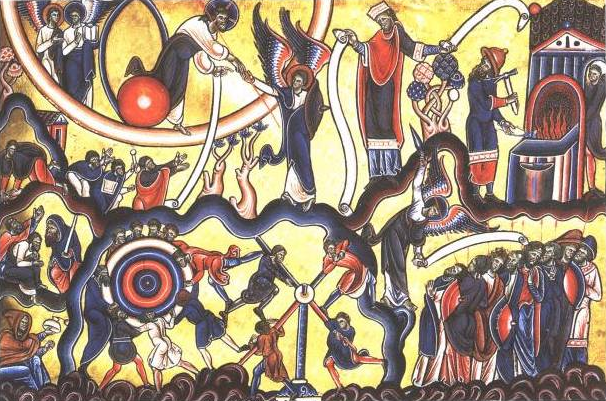

Like this example from the Canterbury Psalter. The trees are supposedly mimetic depictions of mushrooms. So what do the stylized flames, ground, hills, people, etc. really mimetically represent? The kids call it artistic codes or visual culture, but "style" works too. This sort of decontextualized resemblance hunting is really common in hack retcon history.


It's like seeing this sign and assuming Hell, Norway was named for the afterlife.


2. He is so ignorant of medieval history and image culture that he's never seen how unmimetic and stylized their visual semiotics were, if he can define semiotic. See number 1.



Wolf sneaking up to the sheepfold, miniature from the Aberdeen Bestiary, around 1200, illuminations on parchment, University of Aberdeen, Ms.24

Medievals depicted things is stylized ways. The wolf isn't secretly evidence of alien crocadilians. The farmer doesn't have a jet pack either.


3. He's a liar. The Band is derisive because the blend of smug arrogance and cognitive ceiling are annoyingly common in gamma philosophies like occultism. It is typical of a certain brand of hack "history" that plucks things out of the past and uses them to tell whatever story they want. Usually on the basis of visual resemblance. Then historians that are actually aware of the breadth of the historical record have to waste time and resources excising the bullshit. But it's easy and sounds cool.


And demoralized, spirituality empty products of society, conditioned to being spoon-fed "truths" without need for critical thought or moral reasoning get a fun secret that's easy to follow but lets them feel special.


It is impossible to fit each individual manifestation of the psychedelic occult into a single taxonomy. It's all inversion, wizardry, and projected wish fulfillment, and even if we do trace categories, they blur and jump between them. The best we can do is trace out some basic approaches, and see what kind of world view they promote.


Here's one. The psychedelic occult is based on logical impossibility that you journey inward to move outward. It's supposed to be a paradox, and not just gibberish. But the idea of plumbing the depths to reach the heights is common in self-deifying, Gnostic-themed nonsense like Jung's.
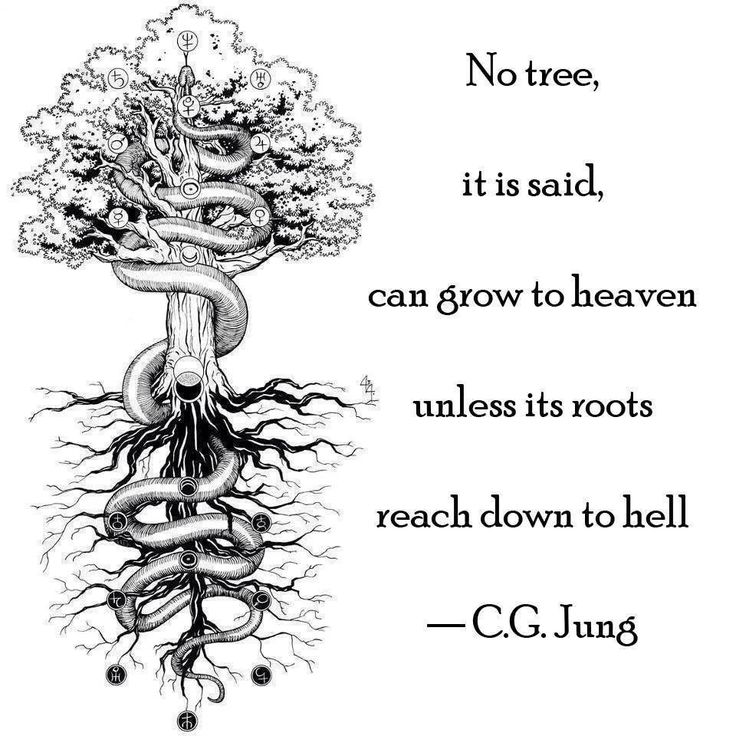


Like this pearl from an earlier post. Note the wizardry in the framing: "it is said" gives it the echo of his fake wisdom of the ages. "Here's my spin on something Nietzsche made up" is less compelling. More truthful, but less compelling.
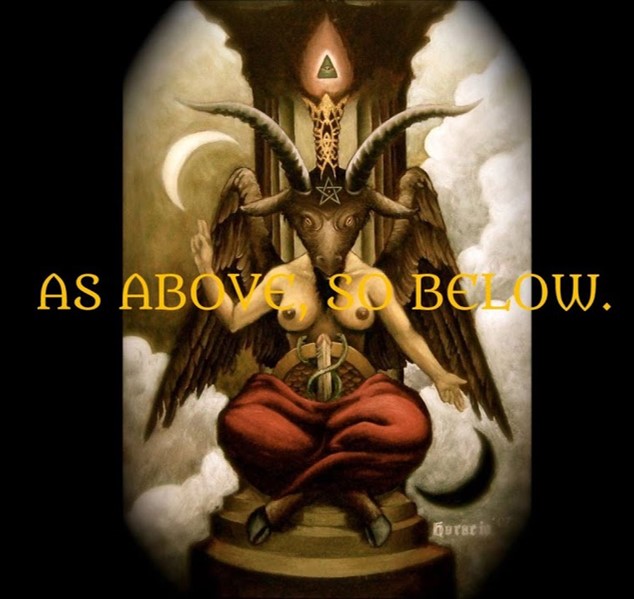


This is not far from the luciferian path motto "as above so below", itself a variation on the ancient pagan notion of man as the microcosm of the cosmos. Above and below, within and without are all in suspension, linked by "magic" forces that are not divine and can be controlled by mind and will.   
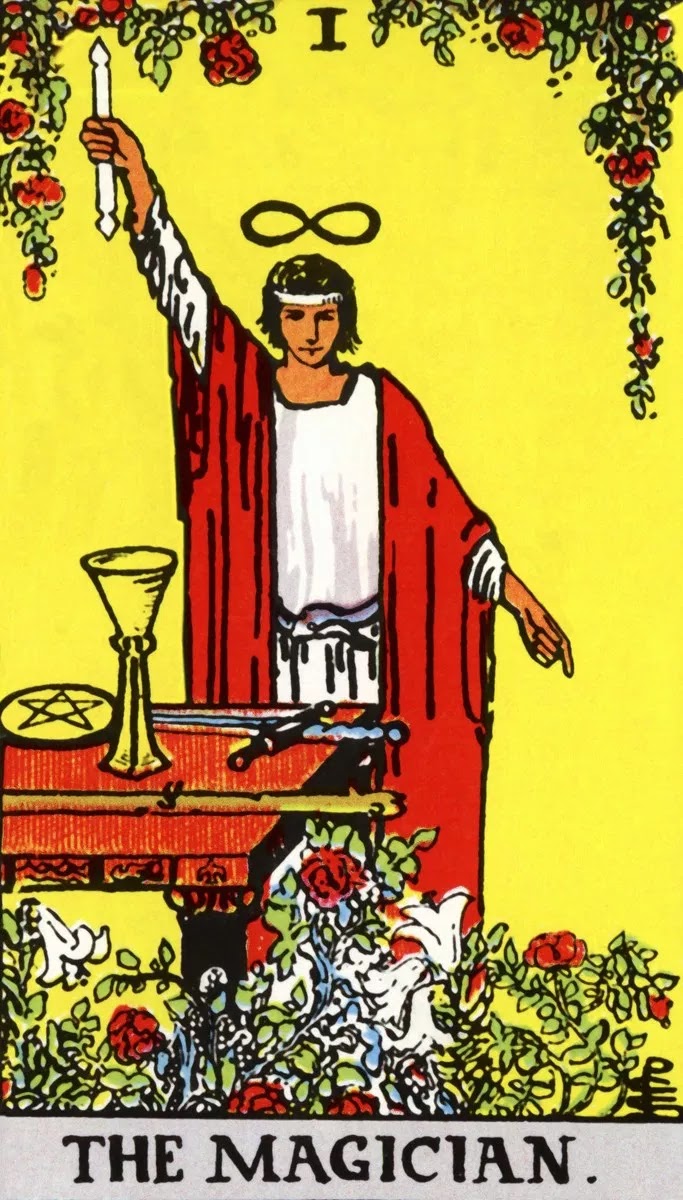


Pamela Coleman Smith, The Magician from the Rider-Waite tarot deck, 1909 

The idea is originally Hermetic, if these distinctions actually matter in something this garbled. According to the Emerald Tablet of Hermes Trismegistus, "'that which is Below corresponds to that which is Above, and that which is Above corresponds to that which is Below, to accomplish the miracle of the One Thing.' Thus, whatever happens on any level of reality (physical, emotional, or mental) also happens on every other level." This is the basis of Hermetic as well as Luciferian magic. In terms of the micro/macrocosm: "the macrocosm is as the microcosm and vice versa; within each lies the other, and through understanding one (usually the microcosm) a person may understand the other." 

These fake balance occultists love the infinity symbol, despite the infinite being literally beyond finite consciousness. Enlightened balance of made-up "opposites" forever or something
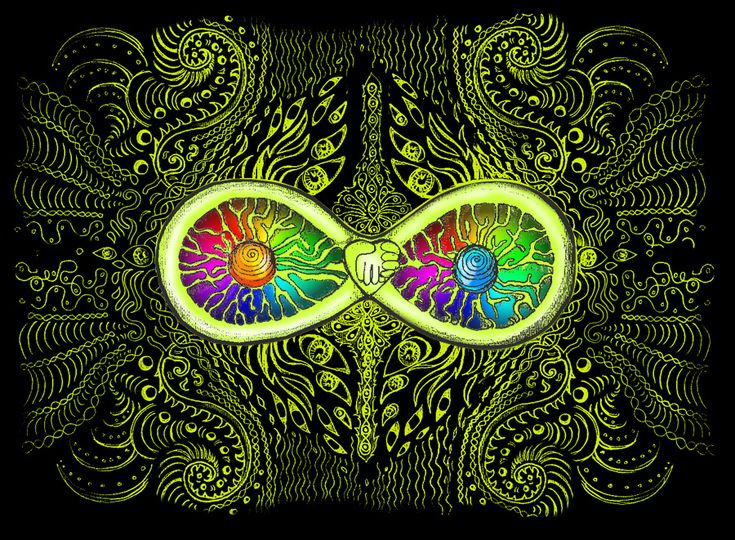


We can even make it psychedelic!

Occultists love to pretend random resemblances are meaningful... This resembles something...



Something like this...


So the psychedelic occult follows the same pattern as other forms of the occult - reason enough to give it a wide birth. Staying away from peddlers of chemical cures is never a bad idea. And what about the casual realists just looking for a good time that support and normalize this? How do we squeeze the realists and occultists into the same scene? What made this self-evident idiocy so appealing?

It seemed cool.
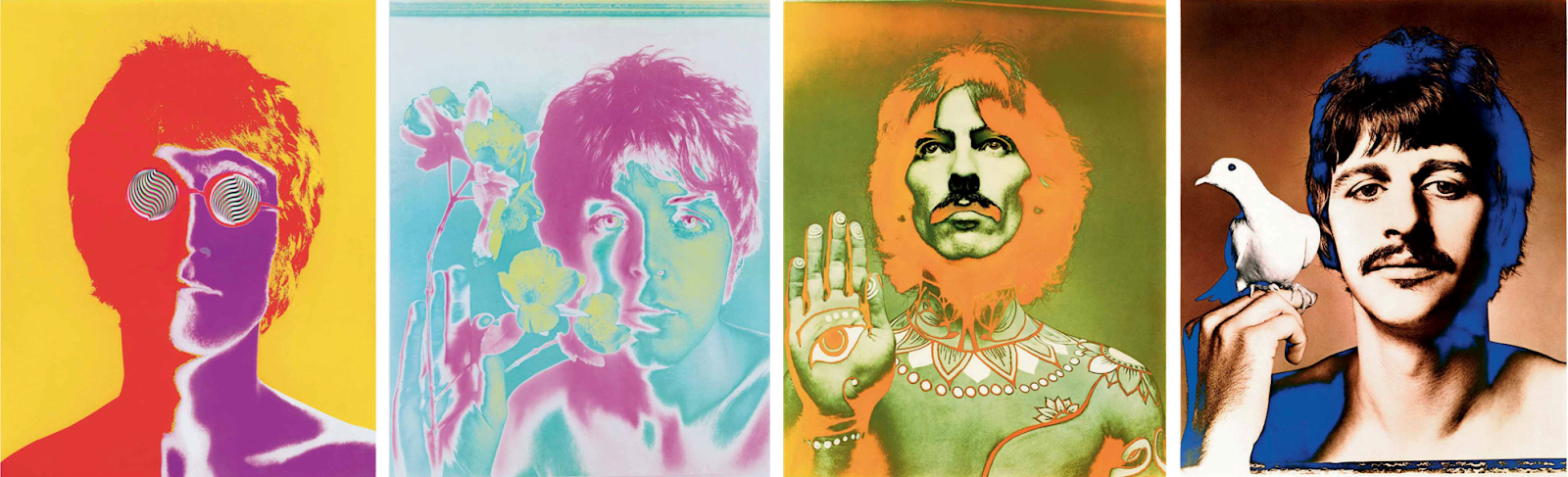


Richard Avedon, The Beatles, 1967, altered photographs published in Look magazine, 9 January 1968


This brings back to the anti-hero, but a particular kind. Another Super-Villain Team-Up, this time between the outlaw non-comformist and an ancient Dionysian pattern of intoxicated musical madness.
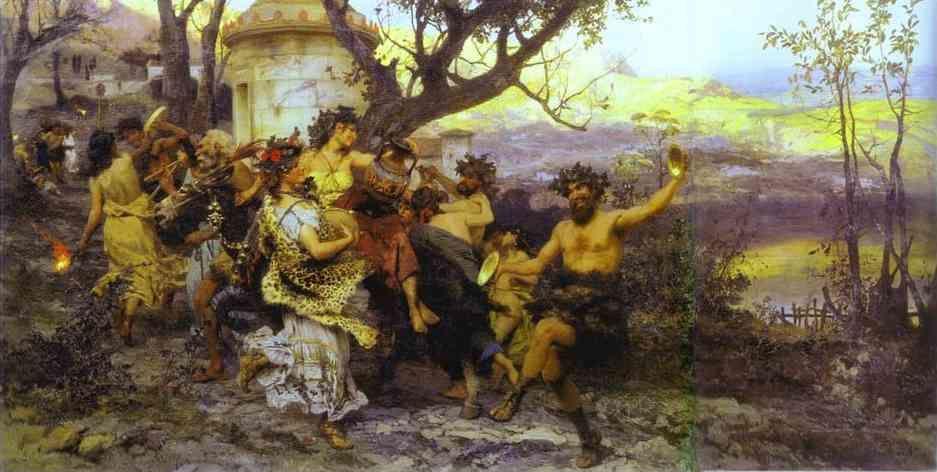


Henryk Siemiradzki, Bacchanalia, 1890, oil on canvas

Music, madness, mysticism, and intoxicated degeneracy had a long history in the West. But the inversion of social order was an outlet or a threat, not an aspirational way of life. 


The Band looked at the media-created anti-hero as a logical outcome of the natural human desire for inspiring figures in an unheroic society. Where the Boomers and late Silents differed from their parents is that they never knew a world that wasn't a cradle of media and centralized institutions. For the massive middle class, safe, unheroic, systematic order was all they knew.
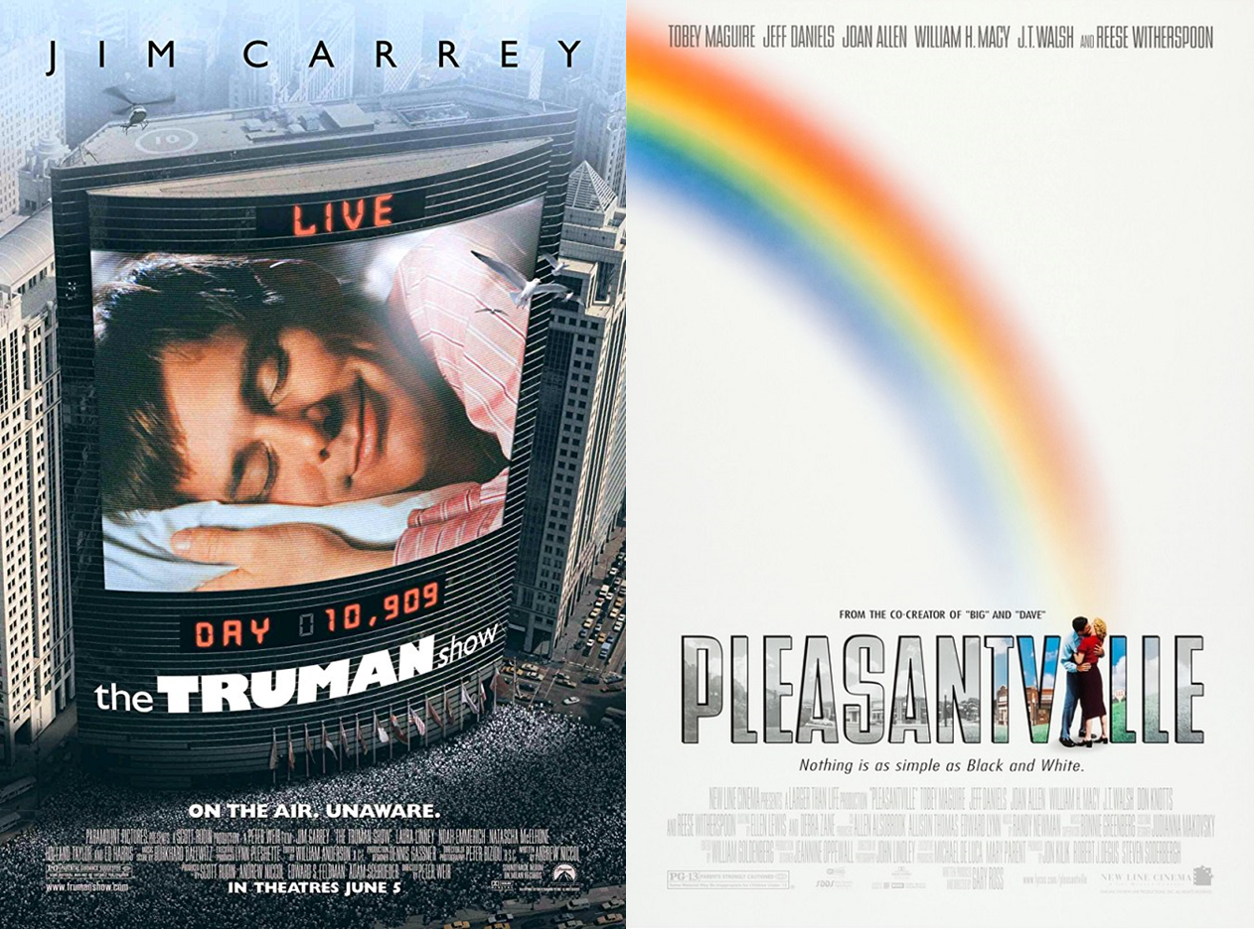


The Truman Show, 1998, directed by Peter Weir 
Pleasantville, 1998, directed by Gary Ross

If you want to use a Hollywood analogy, their entire formative experience was a cross between The Truman Show and Pleasantville, only blown up to a societal level. And with all the insight into reality that you would expect. 



It's natural a teenager in '63 or '64, coddled by high-trust, relatively high-functioning social structures and free from meaningful consequences, might feel stifled and restless. Pop heroes from the 50s and early 60s stood out because they were exceptional in ways impossible to actually aspire to. How does one become a hero in a society stratified by meaningless grades and blue ribbons, and where "leading citizens" have clay feet?


 The space for the anti-hero opens up when the culture is so all-pervasive and unheroic that you have to reject aspects of it to express traditional heroic characteristics. Obviously, we're not talking about the violent anti-heroes yet. Those don't pop up in the movies and comics until a few years later, although the speed with which mass culture devolves is a tell that it wasn't organic. In an environment this centrally controlled, superficially conformist, and restrained by fake civility, we're referring to characteristics as basic as self-reliance and individualism. There is so much going on here - weaponizing a generation of compliant, self-righteous, consumerist egoists is at least its own post.



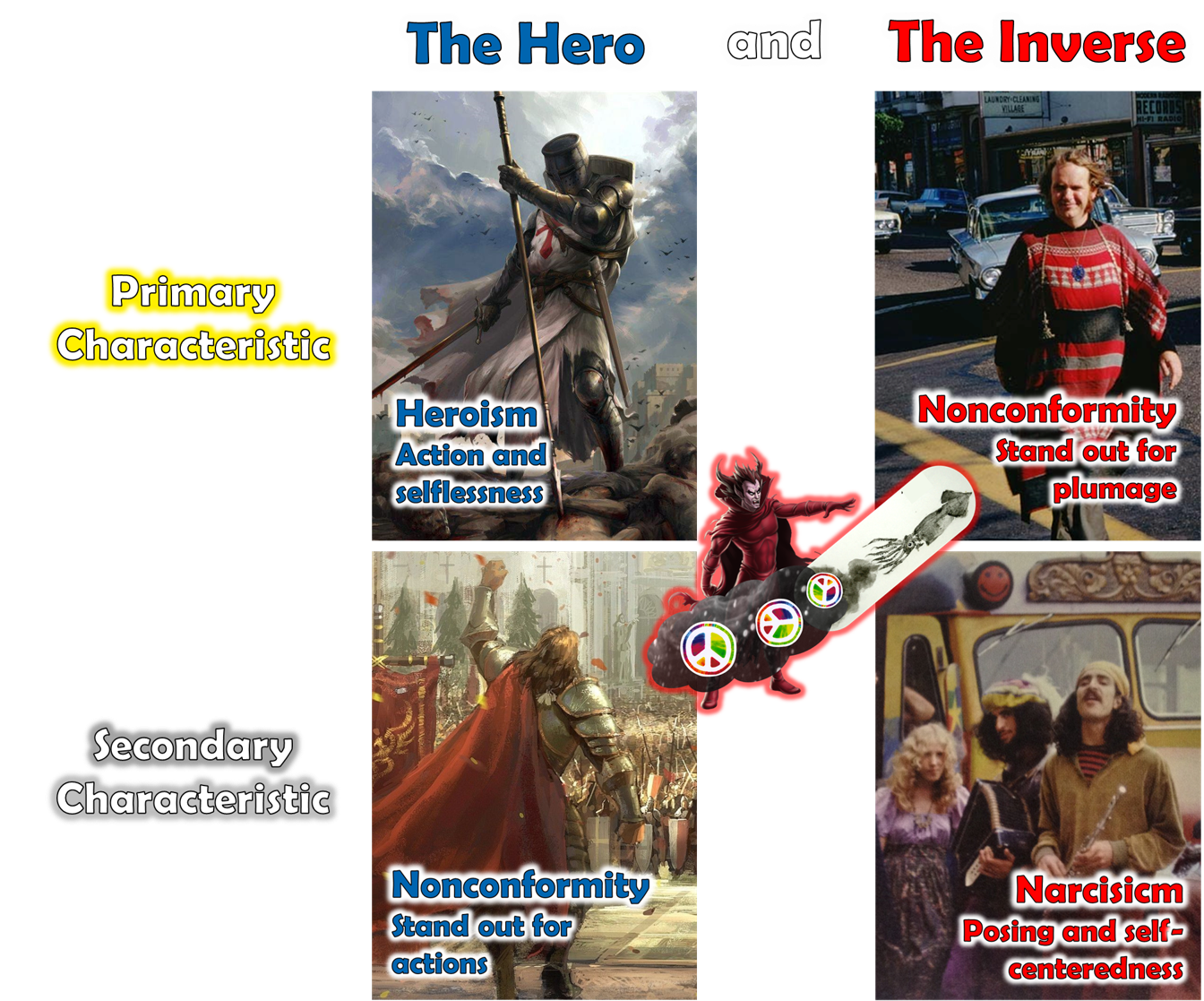
For now, we will limit it to what's relevant to psychedelia. What we are looking at is less anti-heroism than the inversion of heroism - turning a secondary quality into the defining one.
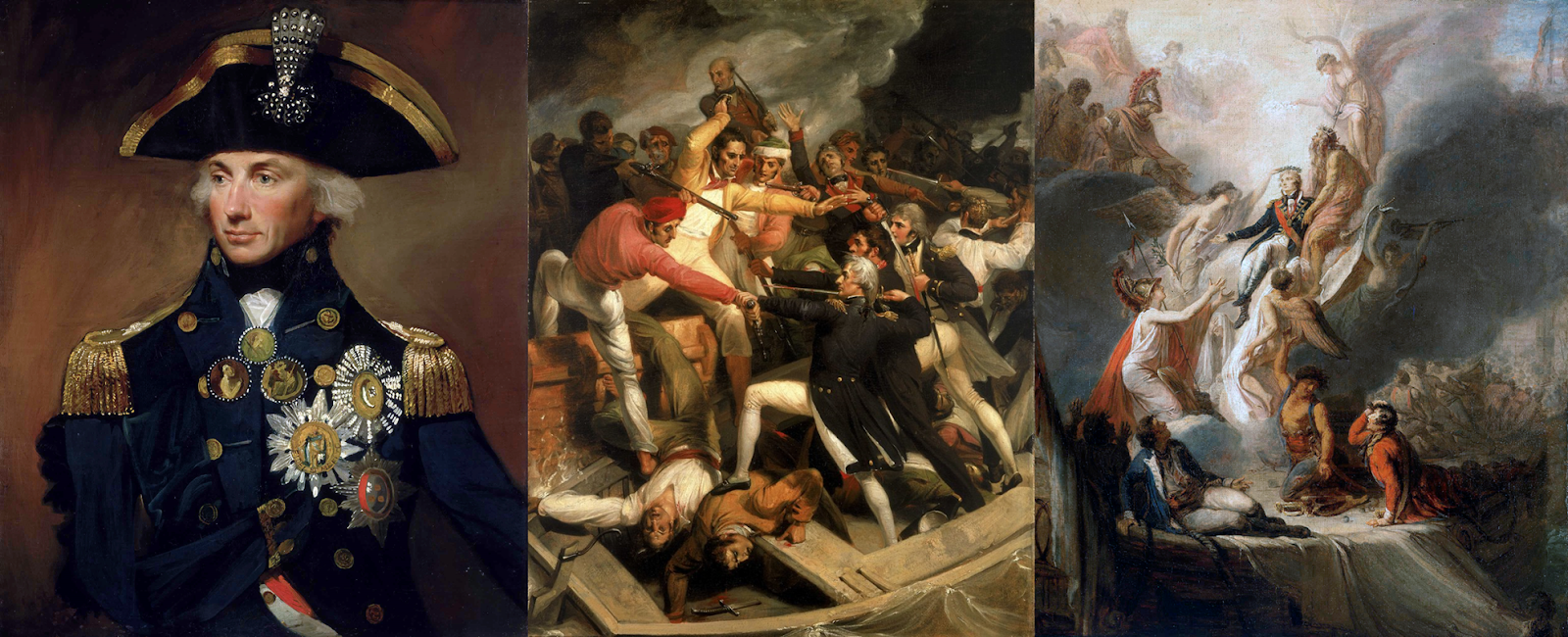


Lemuel Francis Abbott, Rear-Admiral Sir Horatio Nelson, 1799, oil on canvas, National Maritime Museum
Richard Westall, Nelson in Conflict with a Spanish Launch, 3 July 1797, 1806, oil on canvas, Royal Museums Greenwich
Pierre-Nicolas Legrand de Lérant, The Apotheosis of Nelson, between 1805-1818, oil on canvas, National Maritime Museum 
Heroes are defined by actions - self-sacrifice and responsibility. This is their primary quality , and on this level they are champions or even personifications of cultural values. 
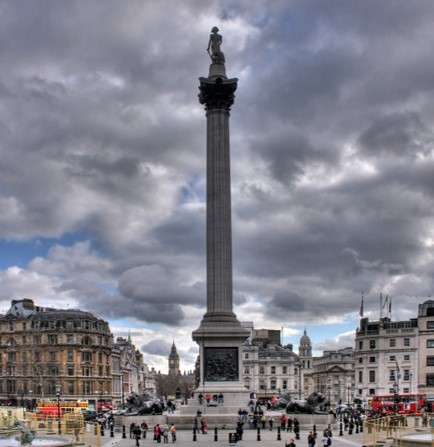

William Railton, E. H. Baily, and Sir Edwin Landseer, Nelson's Column, granite and bronze, 1840-1843, Trafalgar Square, London

But doing great deeds has the secondary effect of making heroes stand out from the people they represent. 

You could say that on this level they are "non-conformist" because they do not conform to ordinary limits and are distinguished as individuals because of it. The same applies to anti-heroes - doing heroic deeds is what separates them from ordinary degenerates. They aren't heroes but they can be situationally heroic. 
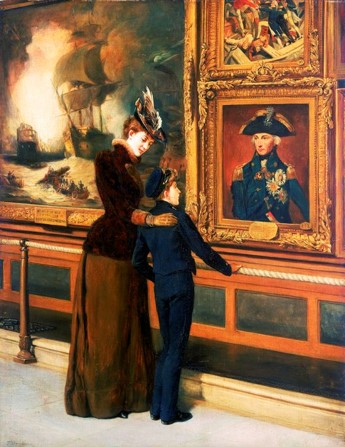


Thomas Davidson, England's Pride and Glory, 1894, oil on canvas, National Maritime Museum 

Action first, memorialization second.


But distinguishing yourself through heroic action is inconceivable in the all-pervasive unheroic mass cultural petrie dish of the 1950s and early 60s. There is a perfect storm of compounding factors:
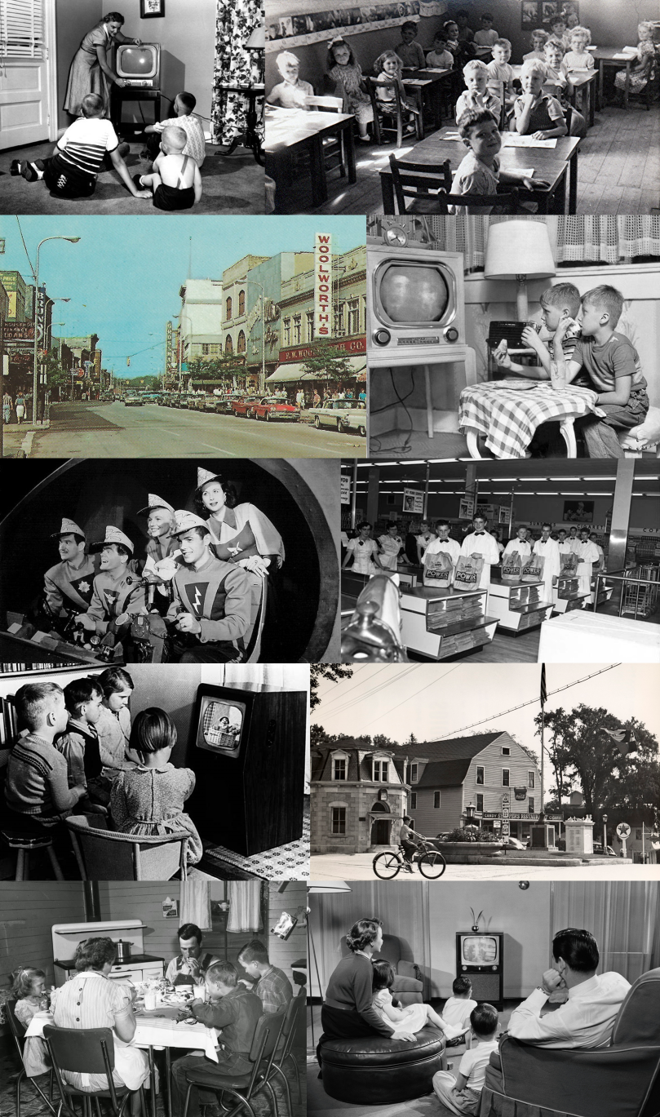


Risk-avoidance and timidity from a life without meaningful consequences outside of the social. 

Conceptual blinders that confuse the system with reality and make it impossible to imagine possibilities or consequences outside of its cocoon. 

Gullibility from overreliance on being told what to think and who to trust by unquestioned though unearned authorities. 

A shame-based civic "morality" based entirely on what others "think of you". Perhaps the biggest one - hypocrisy and selfishness as a value system.


So heroic action as a mean of standing out is unthinkable, but the secondary characteristic - individualism - is concievable and rebellious in the inverted morality of the day. Not individualism through great deeds, but purely through appearance, as seen in the eyes of others.  Non-conformity not as exceeding limits but as the end in itself. It looks like this:


It isn't heroism, it's cool.

Cool is a broad concept that is impossible to narrowly define, so we will limit it to the strain that applies to popularizing the psychedelic movement.
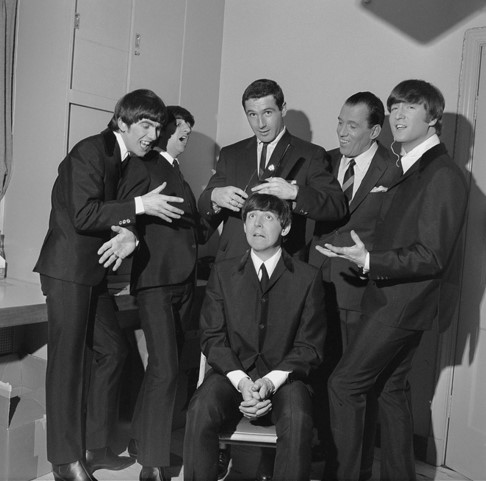


The Beatles "behind the scenes" on the Sullivan Show, 1964

The inversion of morality in popular music resembles the comic book pattern, only with exponentially greater reach and impact. In both cases, a "youth" medium is the vector for subversion while the "elders" cluck about those kids today while funding the hedonism and deflecting responsibility. When your own morality is sham civility, there was no where to stand. 


Rock could endlessly subdivide because it was a media construct based on fake inversion. The "values" have no positive rationally coherent substance to stand on. The only connective thread is negative - just so long as its "not the fake mainstream civility". You need a population that is almost pathologically incapable of thinking outside of the mass media/institutional world that the system provides in order to accept this level of total inversion.
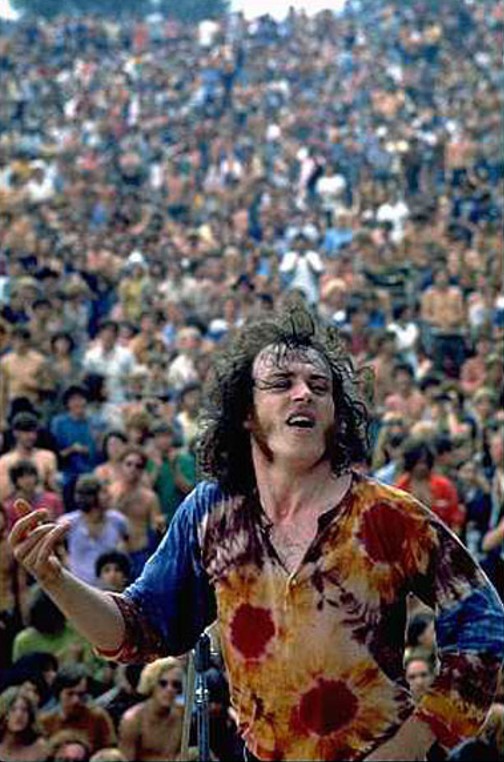


Layers of inversion:

"Non-conformity" as literally the opposite of individualism. Wearing uniforms as standardized as the conformity that they grew up with, but designed to trigger mainstream civility. 

"Self-reliance" as living off family then state and clinging to child-like irresponsibility while "not conforming". 

"Freedom" as sexual degeneracy, toxic narcissism, and pursuit of collective hedonism while "self-reliant". 


It is historically remarkable how their g-g-g-generation froze in that moment in time, but that is an observation for another time. 


The thing about the rock musician was that they did not represent a complete inversion of the hero or society. The musician, like the hero, was individualized by being able to do something. There were plenty of frauds, hacks, and scenesters, but some of these performers were really good. They did offer something exceptional to admire. Many also enjoyed success in very materialist terms, from blowing stacks on the lifestyle to supporting globalist social engineering, so they were aspirational to materialists of any political leaning as well. And their medium - lyrical music - was a primal powerful medium.
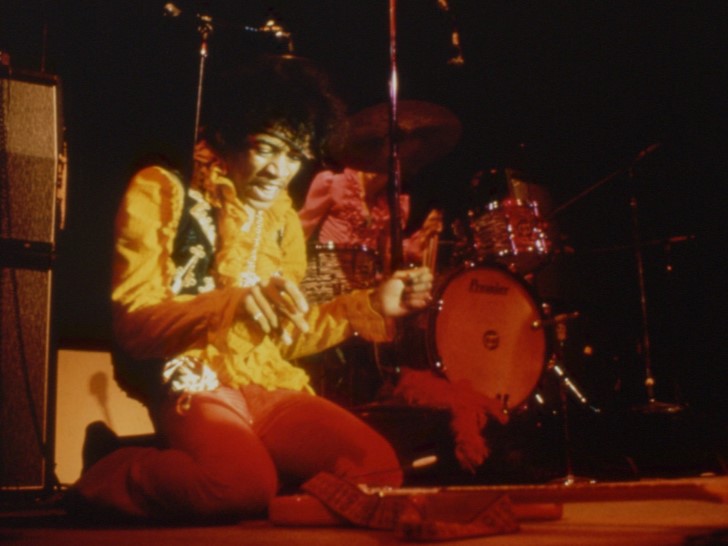


Monterey Pop, 1968, directed by D.A. Pennebaker

They represent safe "rebellion" for a gaslit generation incapable of imagining life outside the system. There is a blind spot in that generation about the man-made nature of societal institutions. But you need this obvious self-contradiction to invert culture and thing "the system" just keeps on truckin' as if by divine will. Only without God, because that would mean moral reasoning or selling out to the man or something. 


The point is that the very idea of meritocracy - skill and effort should correlate with the chance of success - was a product of the high-trust morally-ordered values that they were inverting. It's culturally self-erasing. But we know that.

At this point, there are a lot of threads swirling around, so it is time to get more specific and see how they overlap. Pop psychedelia combines all the aspects of Realist and SecTrans drug use with the inverted morality of non-conformist cool in an identifiable way. The next post will get more specific and about how it blows up.
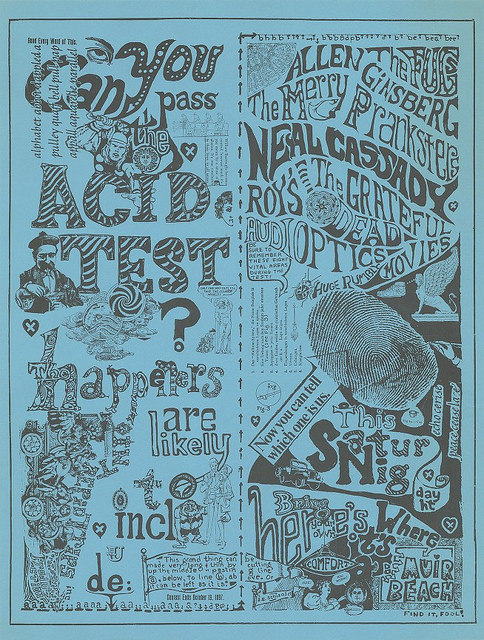


The Fugs, The Grateful Dead, Allen Ginsberg, Can You Pass the Acid Test? Paul Foster, Acid Test Concert Poster for Muir Beach Dec. 11, 1965


Friday, 7 June 2019

How the Occult got Psychedelic... That's Psychology's Music!


For more posts on occult symbolism, click hereFor an intro to the Band see the featured post to the right or check out the archive

Other links: The Band on Gab


The last occult post was pretty broad because it had to set up the idea of the psychedelic occult in a coherent way. This meant laying out the role of belief in assessing the occult, and the importance of focusing on patterns of behavior - what is actually happening - to work around this. The main thing we noticed is that secularists tend to project their credulity onto everyone and get bogged down on things like 'do they really mean it?' when assessing occult patterns. Looking at outcomes on the other hand simply assigns the appropriate blame for consequences. On a societal level, it doesn't matter what each individual really believes. What matters is whether or not the society can protect itself from corrosive forces. Outcomes. We also met the jobbers - hypocritical defenders of culture who lose in ways that build globohomo stars and narratives. It all took a while, so it made sense to wrap there and leave it as a general intro. Check it out if you want to see where we are coming from.


With the conceptual background worked out, we start looking at the psychedelic occult itself. This is more complicated than it appears on the surface. As has proven to be the case with the occult in general, there is a tangle of beliefs, ideas, and agendas here, some sincere and some fake, with varying degrees of coherence in their relationships. It isn't a strict school of thought as much as a series of attitudes swirling around the two poles of chemically-induced altered  states and the eqo-centric rejection of reality - psychedelia and occultism. So the best way to start is by defining the terms. 


There are a lot of posts considering the definition of occult because it is a slippery term that means different thing to different people. Looking at the underlying pattern, it belongs to the larger category of Satanic inversion where personal will and desire are placed above reality. This becomes occult when it involves appealing to the supernatural.


Victor Moscoso, 
Poster for The Grateful Dead. Steve Miller Blues Band, Moby Grape at the Avalon Ballroom, San Francisco, December 23-24, 1966 

Just some wacky fun on the Christmas Eve before the Summer of "Love".

There is a lot going on here.  


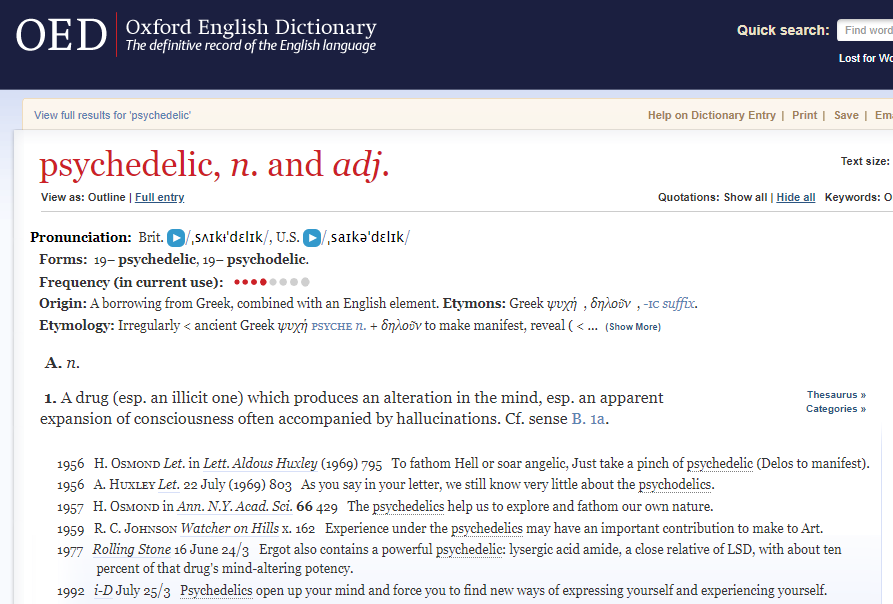
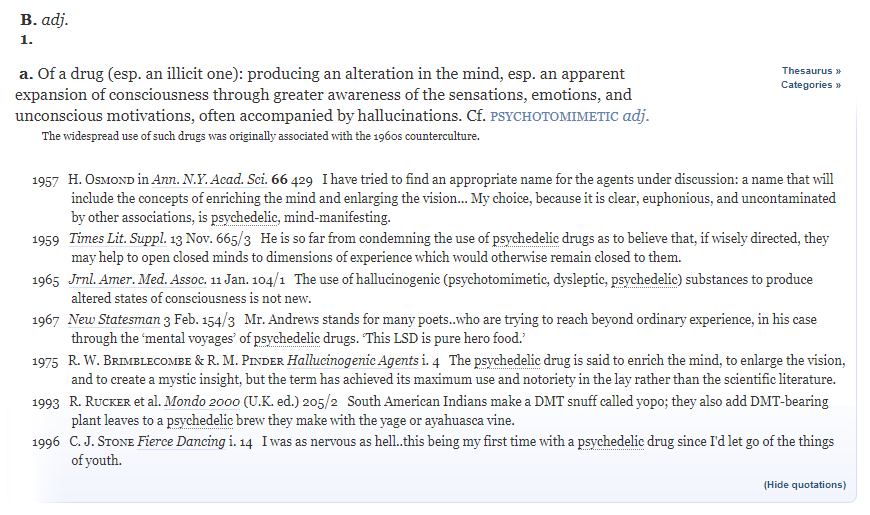
Psychedelic is a term that we haven't looked into. Here's the etymology under the first definition in the Oxford English Dictionary:


This is where we'll start. The word is often used to describe a vivid "electric" aesthetic based on high-intensity and often contrasting colors and blurry fluid pictures and writing. But the origin of the term refers to the use of chemical agents to induce a perceptually or cognitively altered state. It was coined by Humphrey Osmond, an early pioneer in hallucinogenic psychotherapy, in a letter to drug advocate and author Aldous Huxley, one of his early subjects.  Note how a year later her is promoting it as a tool for improving self-awareness.


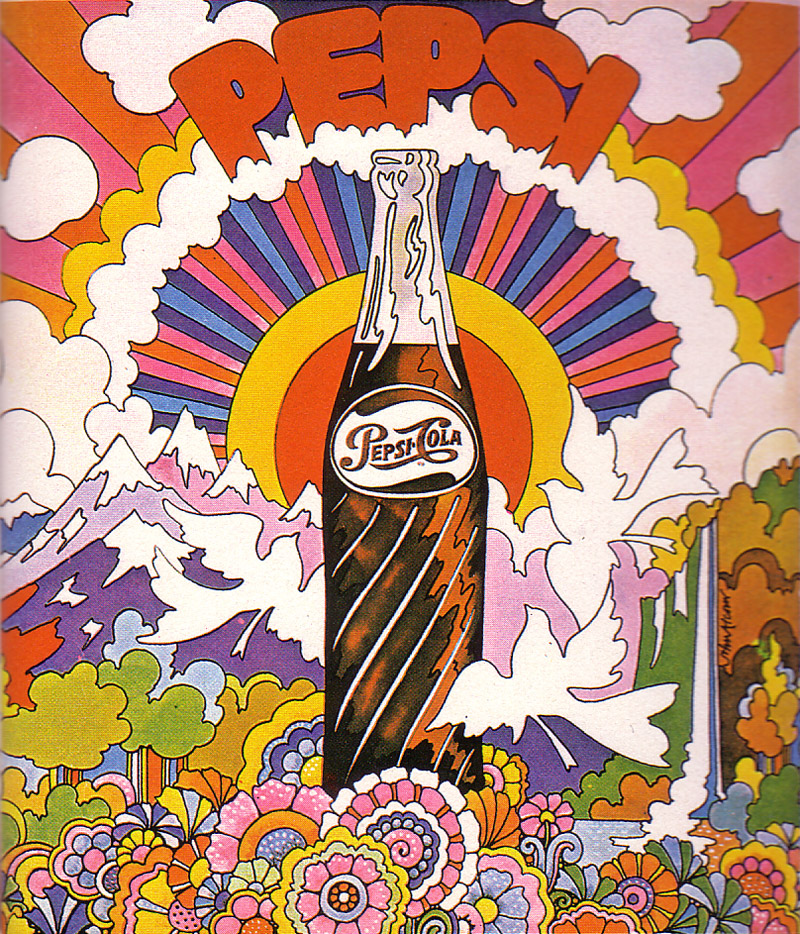
Pepsi ad from 1969

The aesthetic comes from an attempt to represent the perceptual alterations of a psychedelic experience visually. This is different from making art when under the direct influence of a psychedelic.


Here's the first adjective definition:


This raises the difference between psychedelic and hallucinogen, since both refer to the same class of compounds. The etymology is important.


The word hallucinogen literally puts the unreal - hallucinatory - nature of the experience front and center. Your normal perceptual-cognitive relations are temporarily altered, however you define them. 

This is not to claim that an altered state can't let you observe previously unnoticed relationships, but any alternative perspective on things can do that. Different and better are not the same thing - that's the diversity is a strength lie in another coat. Any psychedelic insight still has to withstand logical empirical scrutiny after the psychoactive agent has been metabolized. And the objective reality is that the vast majority of them... don't. 


Osmond's term means "mind-manifesting" which is a fundamental inversion of the hallucinatory. His notion is that the psychedelic brings reality in the form of the "true" self into clearer focus rather than representing an artificial interruption of it. 


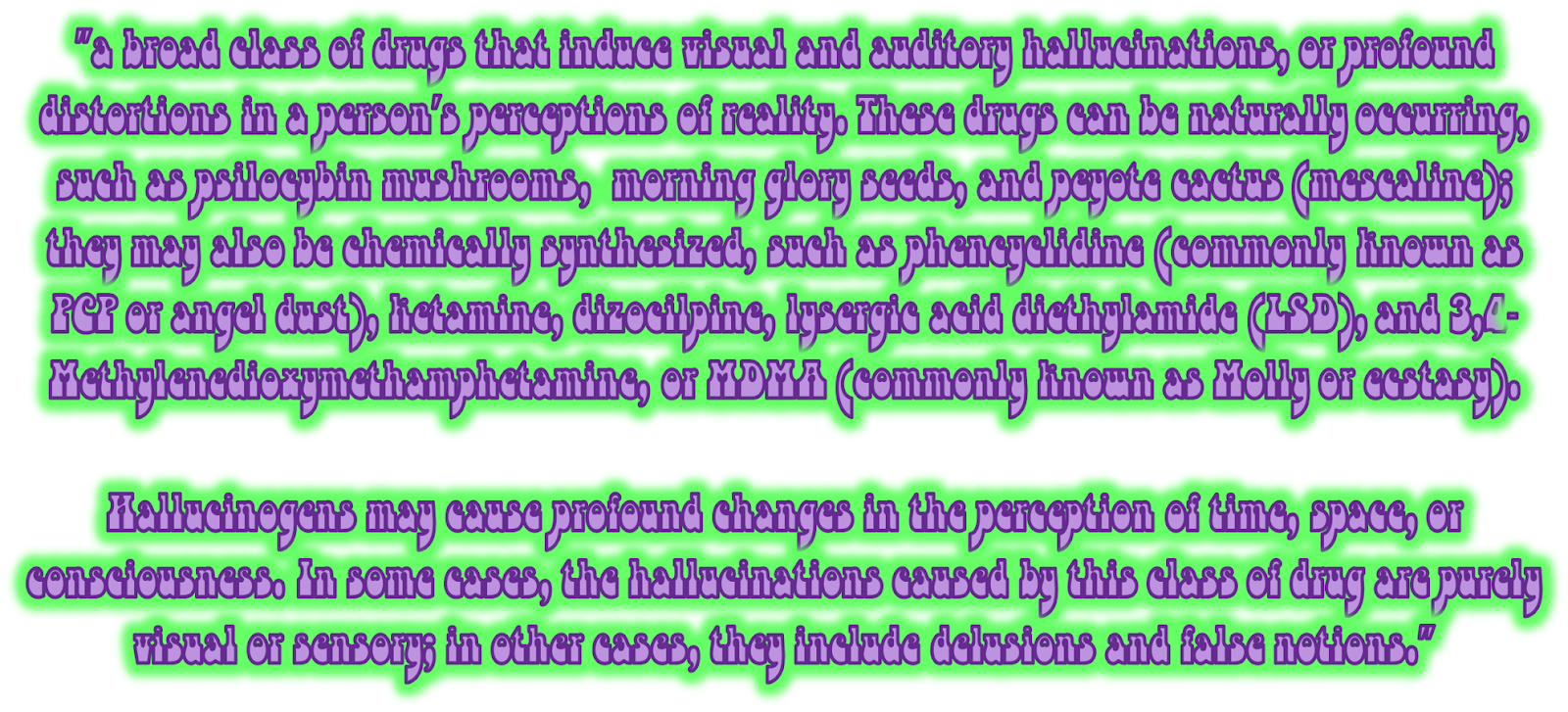
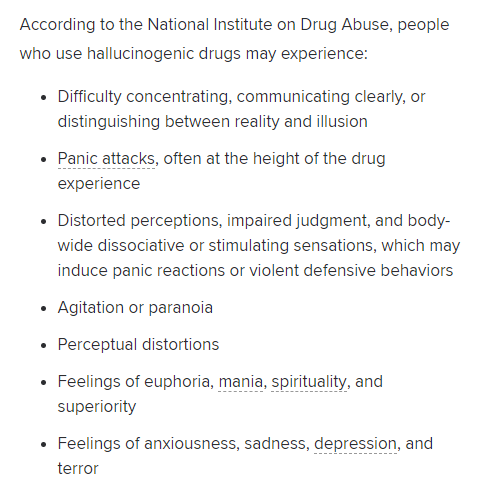
According to Psychology Today, hallucinogens are


The psychedelic occult begins when someone decides that a psychoactive chemical has metaphysical powers.


We aren't going to spend time on the pharmacology of hallucinogens - there are a bunch of them with different effects, and the neurological processes are not precisely understood. Here's Infogalactic with an overview. This article looks at the complex nomenclature and classifies psychedelics as a sub-category of hallucinogenic but points out that that isn't universally accepted.


Skeletal formula and ball-and-stick and space-filling models of lysergic acid diethylamide (LSD) molecule, C20H25N3O; perforated sheet of tabs of blotter acid.

Acid, or LSD is the drug most commonly associated with psychedelia as a 20th century movement. It was first synthesized in 1938 by Dr. Albert Hofmann of Sandoz's pharmaceutical research lab, though he didn\t discover the mind-altering properties until ingesting it by accident in 1943. Information on structures, delivery mechanisms, and side effects are easy to find. 


The problem with a lot of information on this subject is that it provides little on the qualitative effects of the substance that makes it appealing in the first place. Consider this from our Psychology Today:


Reading this, it sounds almost like a chemical weapon. It's not untrue - it just focuses on the the negative side-effects likely to be encountered in a medical emergency and discouraging overall use.

But this isn't going to do much for someone who is alienated from or distrusts the system. Especially after they have tried psychedelics without the "bad trips" that sites like this pretend are ubiquitous. 


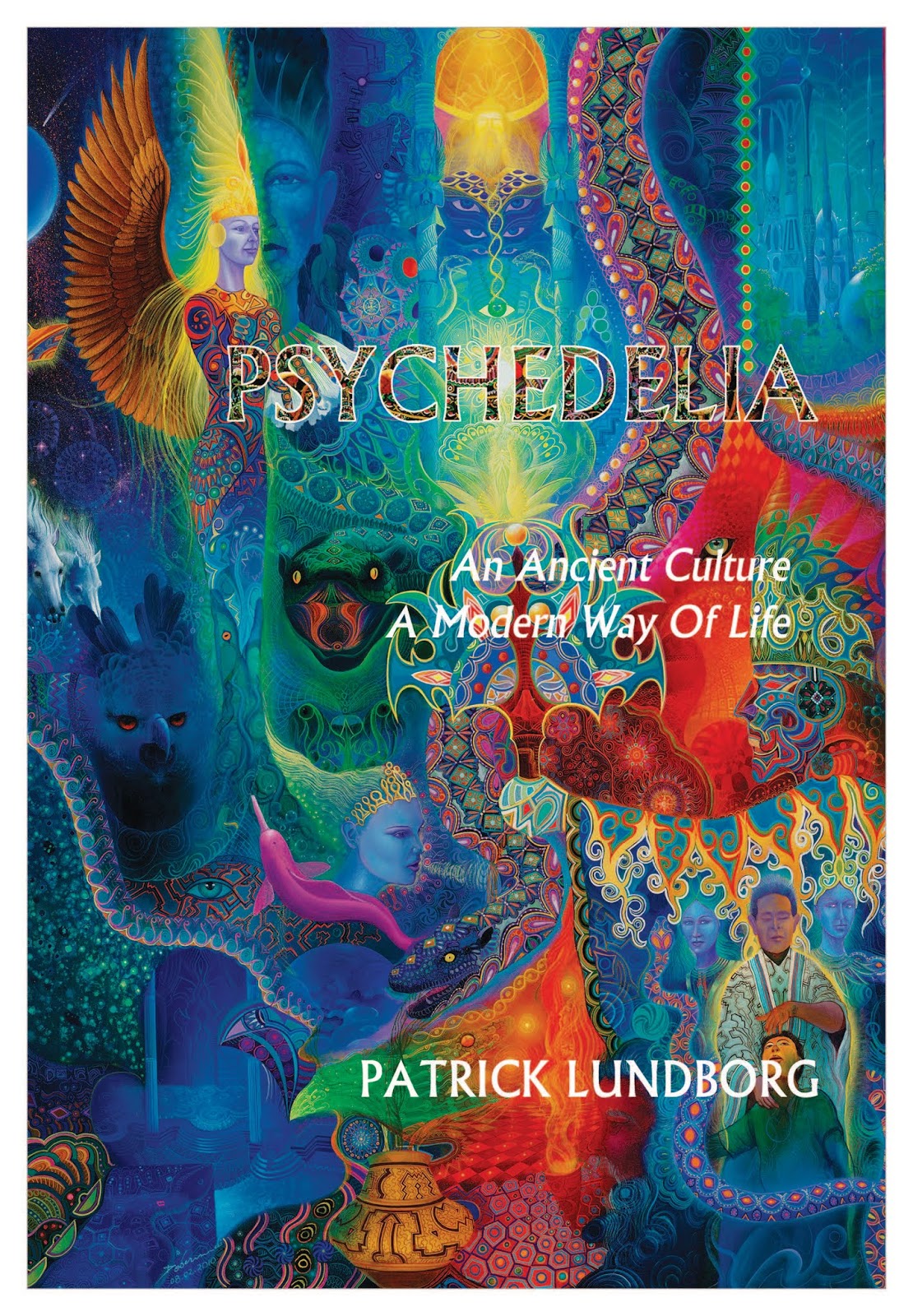
Patrick Lundborg, Psychedelia: An Ancient Culture A Modern Way of Life

Lundborg is a drug-addled solipsist that resembles Jordan Peterson on acid rather than mental illness. There's the nonsense spray of epistemologically-incoherent symbols and references providing cover for an ineffectual and interior-focused form of self-deification. But it sounds deep.

Spiritual Progress! - let's call it Spirituality! - as an illusory, chemically induced phantasy that ironically makes sure real progress never happens. You get the guru you deserve.


Lundbord is as credible as an acid flashback, but compare this excerpt from rambling inteview on his Unified Psychedelic Theory with the public health passage above:

the psychedelic experience is a mystical revelation of its own. It doesn’t need to be explained or interpreted through some existing tradition. The psychedelic compound provides its own distinct properties: how the trip evolves, its extremely rich impact on your cerebral processing, the lingering effects on your world-view. This wonder is given to you from nature, and you should let it unfold itself in all its magnificent glory. The tenets and forms surrounding a tryptamine mystery cult should obviously be designed by the experience itself, not by importing learning from poorly related realms. 

It's like they're speaking different languages. All the public health notices in the world aren't going to reach the sort of lost soul who can read this and actually find some deeper meaning to grasp onto. More on that later. For now we need to break down the hokum around psychedelia into some general patterns to see where and how the occult fits in. Begin empirically.


Both Psychology Today and Lundborg both reflect realities of hallucinogenic use -  just  different perspectives. There are health risks with the induction of any altered state - anyone who ignores that reveals their moral character. But the altered state can seem feel mystical and enlightening. Both can be real.

The post-war psychedelic movement revolved around LSD - psilocybin mushrooms were also popular, but acid drove the culture. So we'll focus here - looking for patterns, not a comprehensive survey.


It is important to understand the nature of this altered state to grasp why is was so appealing to manipulators and charlatans alike. This raises a similar dilemma to perverse imagery - how to expose what is important without inadvertently promoting degeneracy? Discussing the qualitative experience of a mind-altering substance like LSD is not an endorsement, or even a suggestion to experiment. There is no fear-mongering in the objective truth that it best to leave these things alone. We just have to be clear about what made this so seductive and misleading.


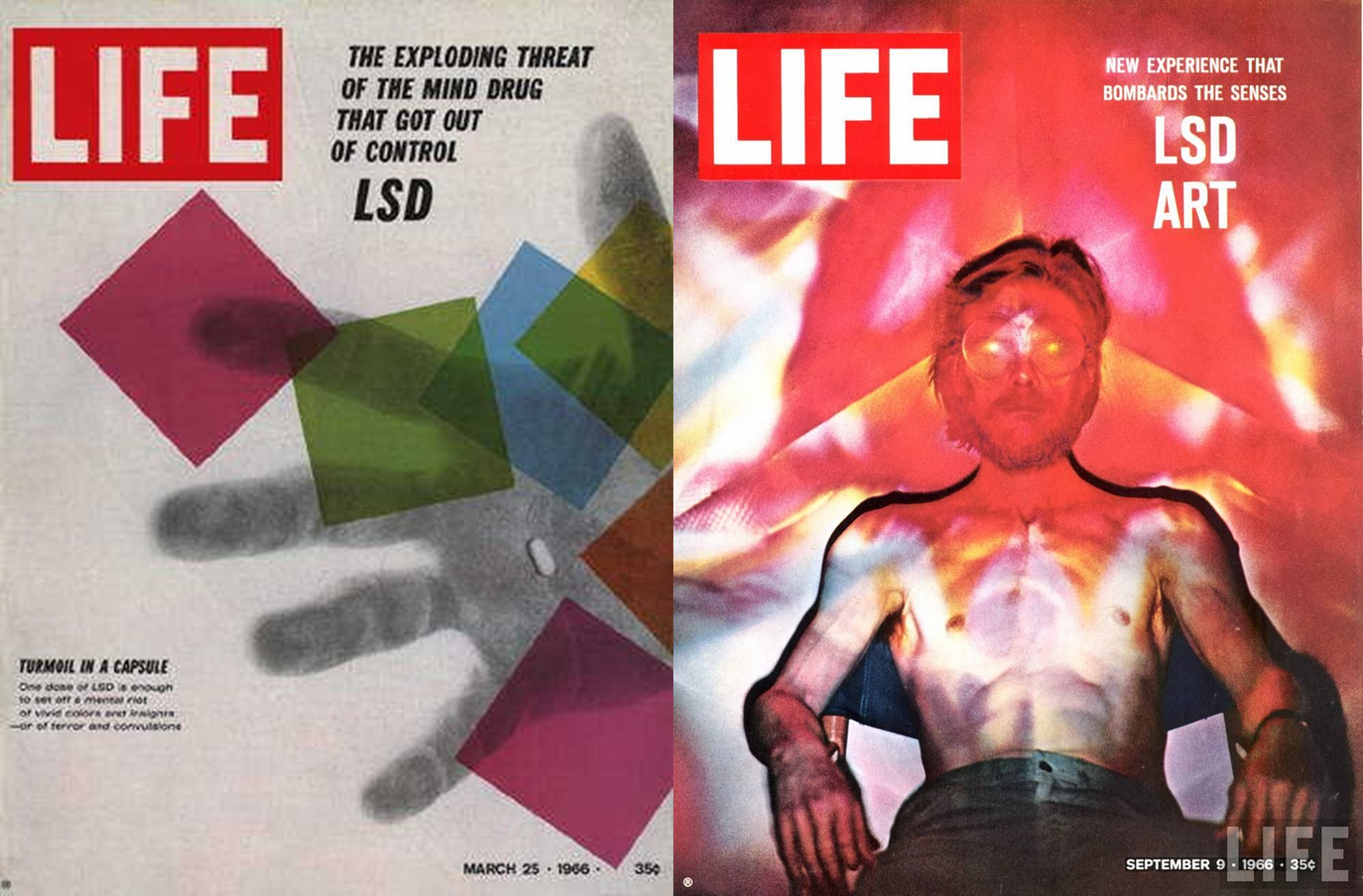
Two Life magazine covers from 1966 playing both sides. People need to be attentive to how media narratives not only distort reality, they are not even internally coherent. When we say modern media culture is fake, it means completely disconnected from the search for truth. This is not "spin" - it is whatever fake narrative the media controllers prefer at the time. Then consider who controls the media and how it connects to mass culture and politics. 


Qualitatively, acid affects different people differently. An altered state doesn't change who you are on a fundamental level, so your personality and circumstances will determine the results - outcomes depend on inputs and the drug is just one of them. Set and setting was Timothy Leary's term. At the same time, Lundborg and others are correct in identifying general patterns in a trip because the drug metabolizes in a predictable way and the mind adapts to the experience. The term hallucinogen is a bit misleading for acid because users generally don't see vision-like images of things that aren't there like leprechauns or temples. The world remains the world, but perception - perceptual relations, conceptual associations, all of it - is shifted. Like dropping a gel over a stage light, if the gel filtered a lot more than color.


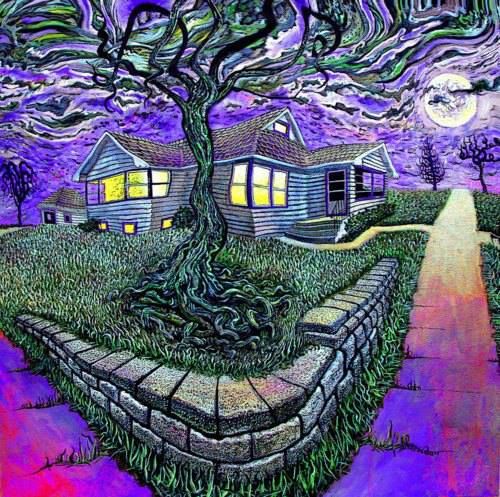
Shimmering lines and colors make the familiar strange. Then the human tendency to see patterns takes over. Some are actual insights. Most are faces in the clouds. This picture captures how a distorted house looks like a face. The important point is that it is the same house seen differently. It isn't a spirit of the earth contacting you directly. 


At first, it is dissociating - the onset is powerful, and as reality seems to shift, it can be traumatic. Especially if the user is otherwise intoxicated or unprepared. Otherwise it is fascinating and mildly euphoric. Lines and colors shimmer and blur, and there appears to be waves or pulses of energy flowing between things. This called visual drifting and is common with LSD. 

It's easy to see where the compatibility with various forms of New Age "Eastern spirituality" comes in - the blurring  and shimmering of visual drift look like the dissolution into formlessness associated with Nirvana. 


The shifts and enhancements in color and light can electrify.


Wes Wilson, poster for The Byrds, Moby Grape, Andrew Staples at Fillmore Auditorium, San Francisco, 1967

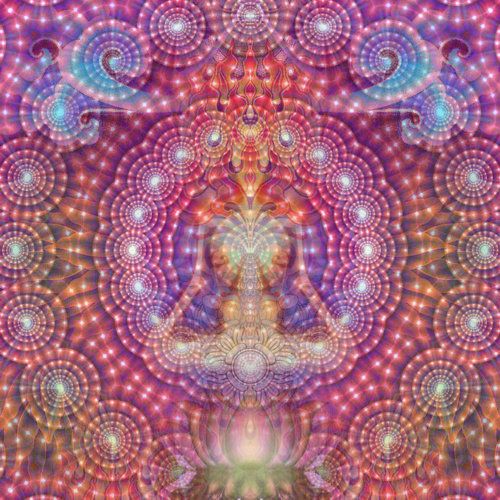
Psychedelic art styles relate to this in two ways - the flowing letters and contrasting colors try to simulate the visual effects of an acid trip and they are stimulating to people on acid. 

But you you don't need mysticism to explain what is happening empirically. The lack of pink elephant-type visionary hallucinations is the key - you aren't seeing into a hidden inner or higher world, you're seeing the same material reality from a different perspective.


Mentally, perception is a process of transformation. Our sense organs transmit light and sound waves to the brain where they are translated into what we see and hear. There are uncertainties around the details of these processes, but that doesn't change that this is what's happening. Qualitatively, acid seems to change this translation process - the same light and sound from the same world going into the brain, but different perceptual relations seen and heard.


The shifts in color and form can be accompanied by something like synesthesia where one form of sense data - like sound - is processed as if it were another. Researchers think synesthesia involves cross-activation in parts of the brain - something similar may happen with LSD. 


The "mystic" unifying energy is pretty much just variations in the appearance of light plus things like sounds and wind registering visually instead of aurally or tactily  Same world, different translation. 


If there is any potential value in this, it is no more than what can be gained from any new perspective - a fresh take on old patterns. In other words, nothing that can't be found without the use of mind-altering chemicals and all the real risks that come with them. As we said, we need to be clear from the outset what we are talking about on a basic empirical level. The vivid perceptual changes and fascination with types of stimuli create vulnerabilities to certain influences and the emotional effects of such a powerful experience are very real. Clarity demystifies a lot of the nonsense around psychedelia.

Things get more interesting when we look into what this experience "means".


We can place the interpretations into overlapping groups. Here, we don't mean users as much as the people trying to control or shape the experience for some external purpose. Call them realists and secular transcendentalists, or people who see potential for manipulation in a chemically altered state and people who believe that supernatural things that are only knowable by faith are somehow found in that chemical.  It's the same split the Band had shown again and again.


W. V. Caldwell, LSD Psychotherapy: An Exploration of Psychedelic and Psycholytic Therapy, Grove Press, 1968

The realists are called that because they accept the empirical reality that the LSD produces a chemically induced altered state with predictable patterns. The motivations are all over the place - all sorts of clinicians were interested in this unusual new drug. What makes them all realist is that they treat the experience as chemical rather than mystical and administer the acid in controlled settings to manipulate the subject in some way.


An example that can be called bad-intentioned would be the famous MK-Ultra and other secret experiments that experimented with acid in mind control. Consider the effects - the dissociation, susceptibility to certain stimuli, and openness to new associations - and it isn't hard to see why. This is nefarious but not occult. An example of the supposedly well-intentioned would be LSD therapy. Osmond, who coined the term psychedelic, was one of the first. Take this with a grain of salt, given what we know about scientific studies and reproducibility, but it is possible that the claims that LSD could help treat alcoholism have some grounds.


But we also know that psychotherapy has been a haven for frauds and whack-jobs, and in this field, the line between empiricism and phantasy is as blurry as an acid trip. 


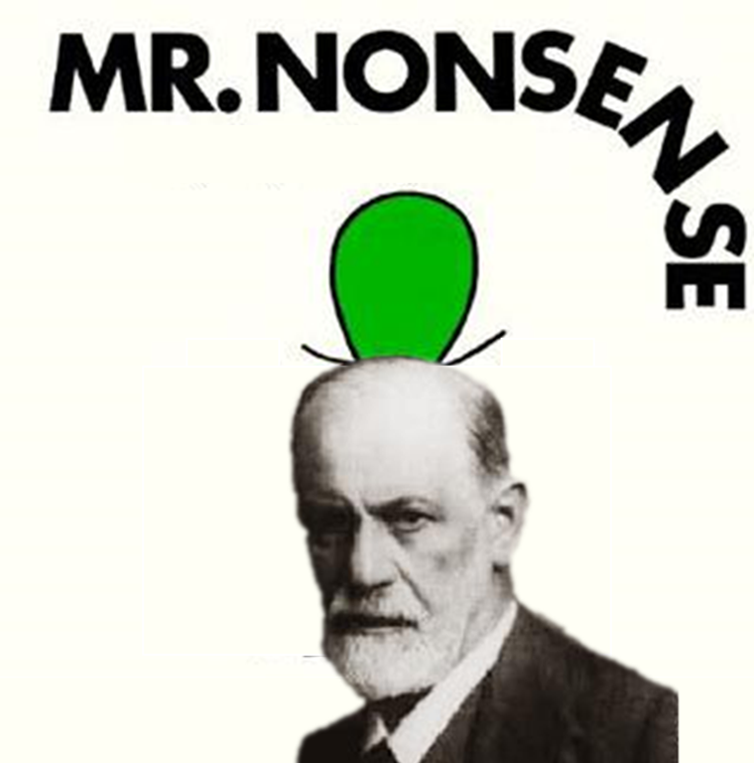
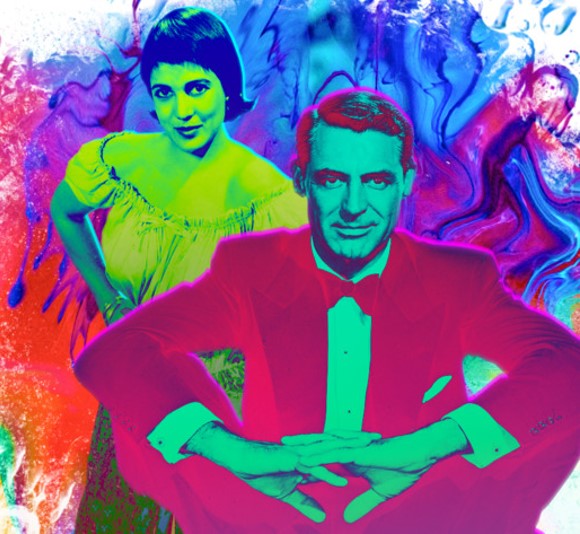
In 1958, actor Cary Grant - a typically tortured Hollywood soul - began taking LSD under the supervision of Mortimer Hartman, a Beverly Hills doctor. According to the article, Grant, tripped 100 times with Hartman and called him “my wise Mahatma.” To be fair, Grant does appear to have reached a better mental state, but not because of Hartman's special insights. The "doctor" is actually quoted as calling acid “a psychic energizer which empties the subconscious and intensifies emotion and memory a hundred times.” This simply isn't true. Whether and however the experience managed to help Grant, Hartman was lying. 


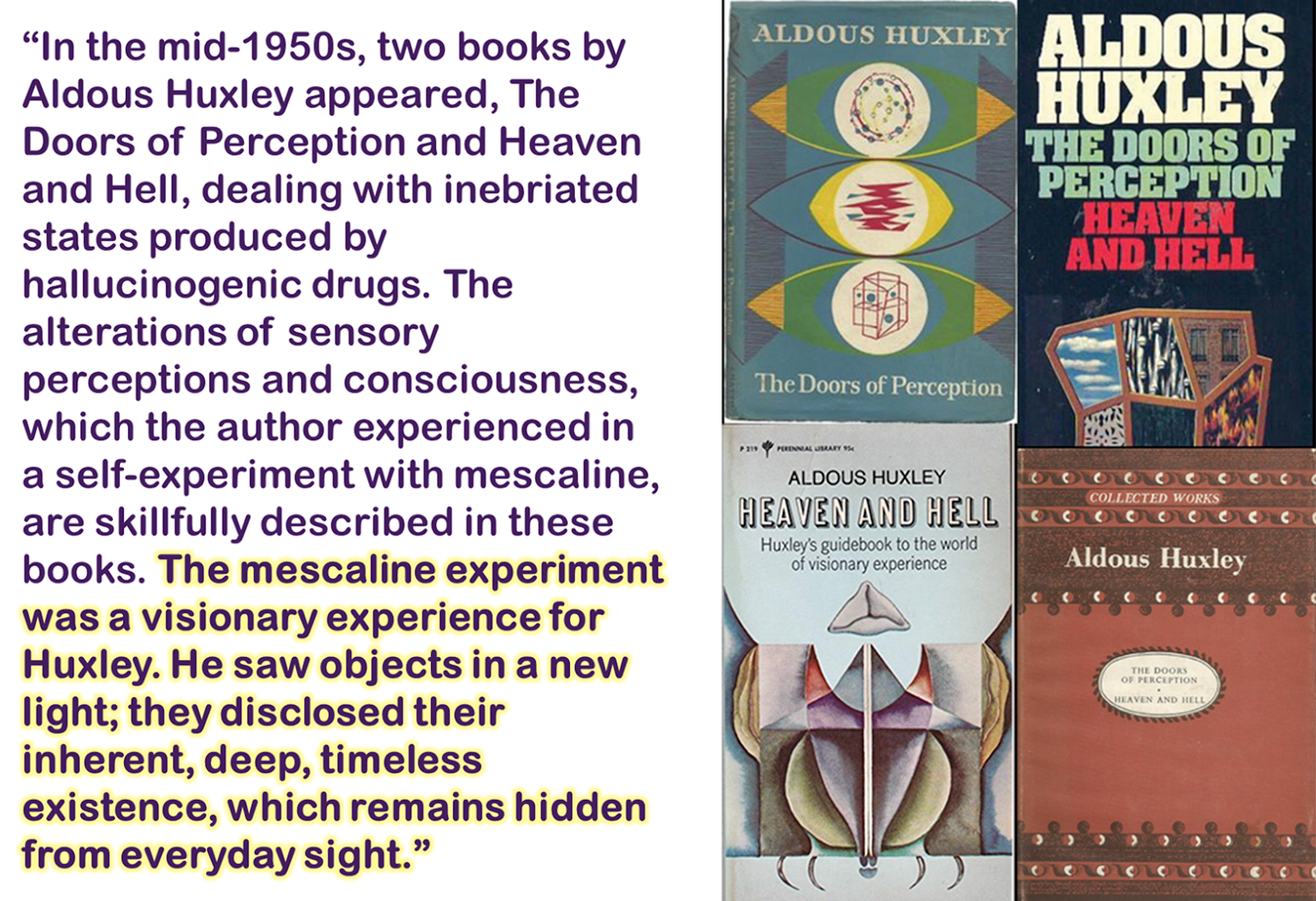
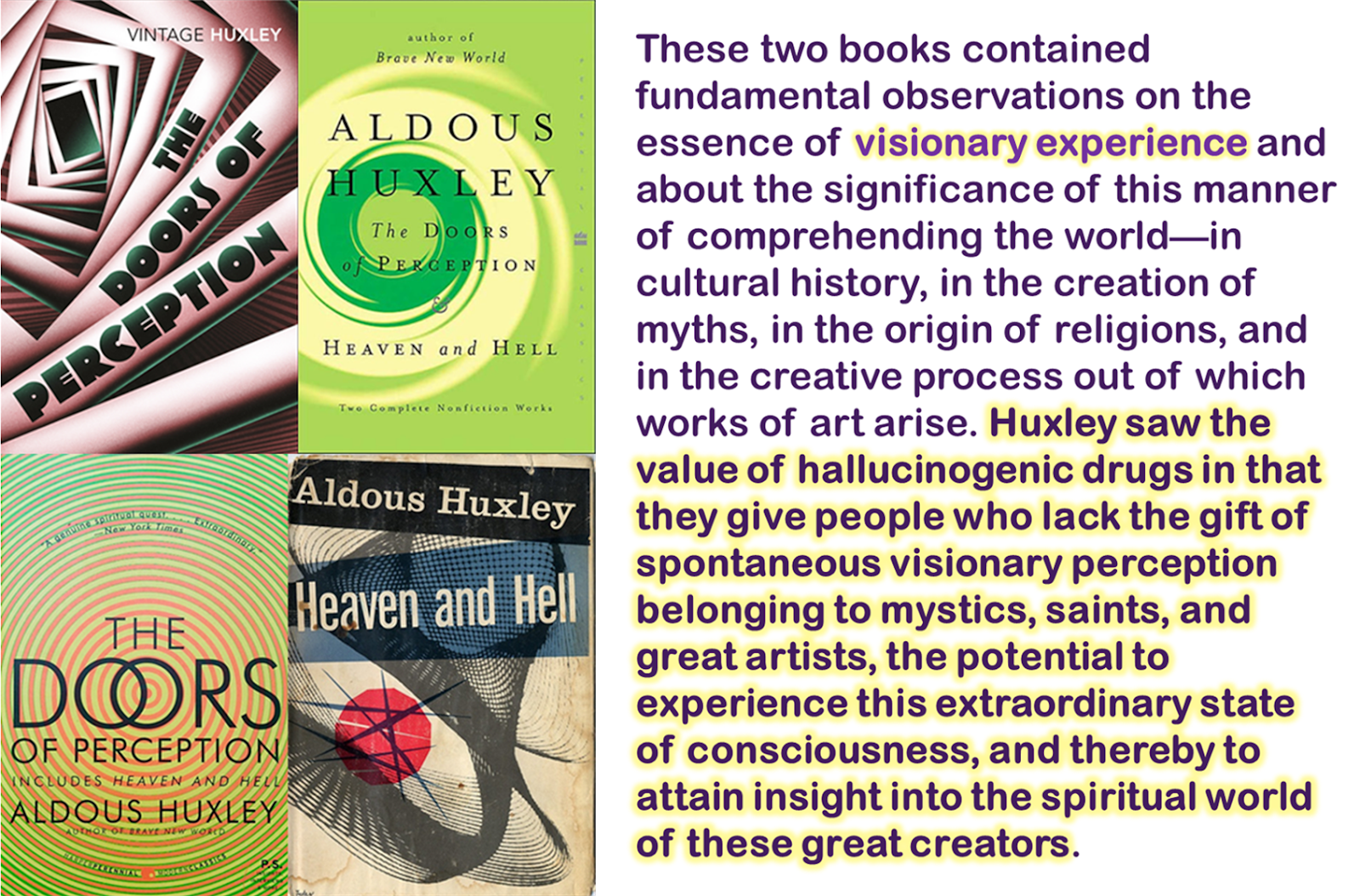
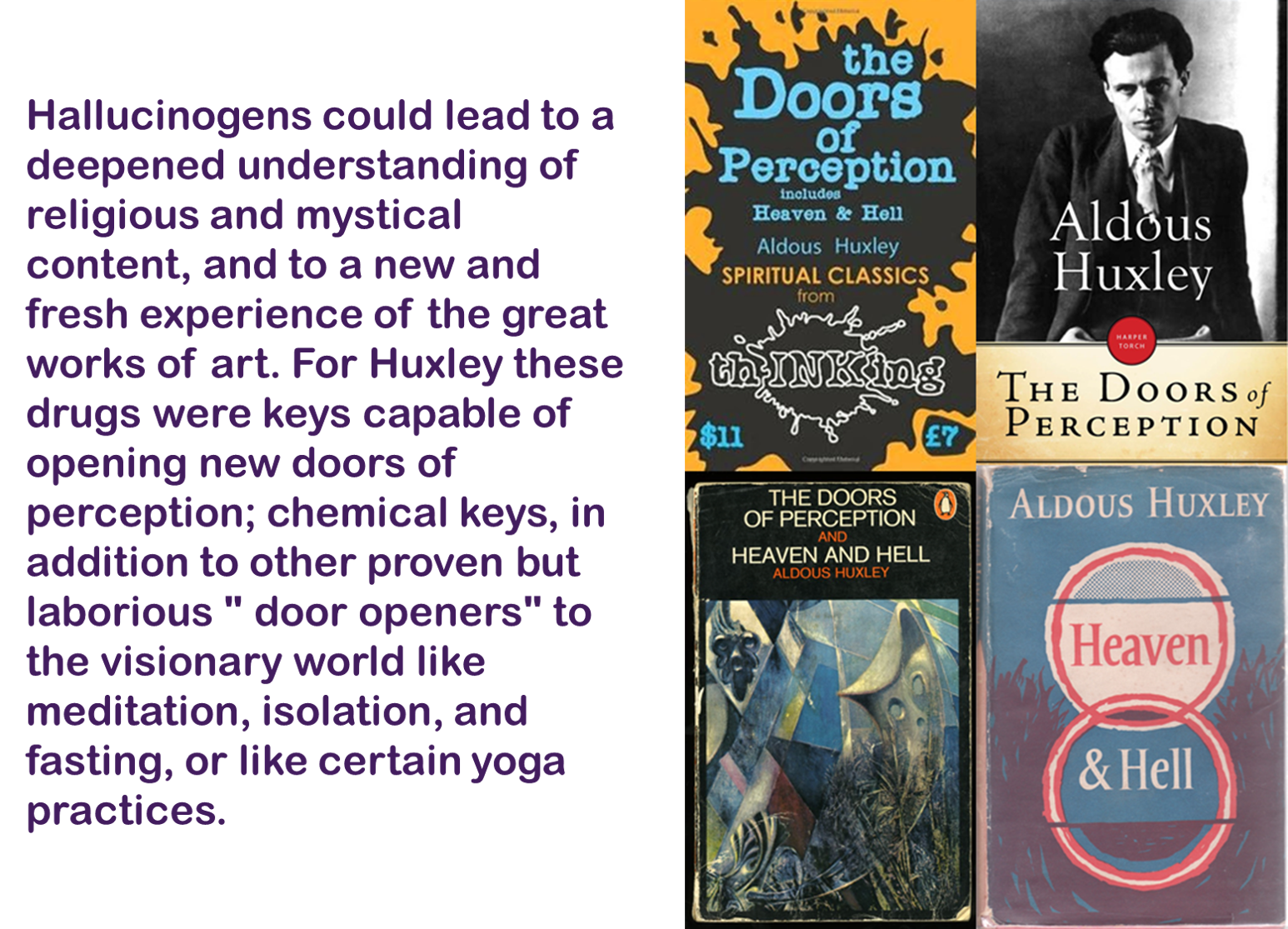
Osmond came up with the term psychedelic in correspondence with Aldous Huxley, the occultist and author who had taken mescaline under Osmond's supervision. Click for some background on Huxley's "psychedelic visionary experience promoting mind altering drugs as part of a religious trip interwoven with eastern mysticism, secular humanism and psychology".


You may wonder why we give a crap about Huxley and Osmond in the 21st-century West. It's partly because they were at the start of this "movement", but it is also because we're shifting ranges to make a point. This is one of those specific instances that lights up larger patterns. Huxley wove altered states into chemical mysticism and secular transcendence.


Osmond was arguing LSD opened true insights into ourselves in a Scientific! way. Put it together and the realist approach crosses into something else.


The inventor of LSD Albert Hofmann reflects on Huxley prior to their meeting in 1961. It is worth quoting the passage at length because it points towards a chemical version of that occult psychology from an older post. They were popular books.


We are obviously no longer in the realm of anything empirical. Read the highlighted passage carefully then ask the Band's guiding question: what can we know and how can we know it? What are the grounds for this deep, timeless existence? How does chemically altering sensory data processing in the brain - a physical process - jump the gap between our temporal, material world and "timeless existence"?  Keep reading - the "grounds" come into view...


To the surprise of hopefully no one reading this, it's the same spray of associations technique that we see in all the Hermetic/gnostic/ esoteric "unity of all religions" bullshit that midwitted charlatans peddle to less clever marks. It sounds deep to people who don't understand the references and lets the charlatan posture as a superior authority who knows what things really. mean. What all these share is the desire for secret or at least special knowledge into higher truths without having to work very hard or be intellectually coherent. Artificially alter your brain chemistry, read some objectively false blather, and presto, your finally a special boy. It's the gamma school of "thinking".


Here's an insight: sanctity, mysticism, and artistic creation aren't the same thing. 


The transcendent becomes secular. Something you'd classify as supernatural, spiritual, metaphysical or "higher" in some way is simply claimed to be a property of the physical material world. There's generally a spray of symbols and references offered up as "justification" that are just historical spin and references to older fables. It's a simple process:

1) make something up
2) pick symbols and quotes that seem profound
3) pretend the symbols and quotes are all examples that "prove" the made up thing. 

There is never any empirical evidence for any of this - it's just wish projection from a secret king with special, but oddly easily to attain insights into hidden truths. And it's not really something that can be "argued" because it's made up. There doesn't have to be internal consistence or coherence because it isn't based on anything real. You can make up whatever you want. In this case, historically and philosophically ignorant wizards made up the phantasy that chemical side-effects are a gate to transcendence.


It is not nit-picking to point out that the things Hofmann and Huxley claim are simulated by hallucinogens are not the same. Their whole metaphysical "philosophy" depends on the deeper notion that the key to Truth, however defined, is locked within the mind. Anything that seems extra-normal is therefore that.

Readers of the Band know that secular transcendence takes many different forms - it's an underlying pattern that you learn to see. The version here is the psychoanalytic one - that the subconscious is where metaphysical things like higher truths actually come from. 


The pattern looks like this: Freudian psychology invents the concept of the subconscious. It's plausible because we do have unconscious thought processes, dreams, and so forth - it seems to correspond to our empirical experience. But Freud makes up an imaginary mental world that operates in ways that were traditionally thought of as supernatural. The main idea for our purposes is that you have a "true" nature beyond subjective awareness of the empirical world, but instead of a "higher" power, it is hidden in your own mind. Therefore any kind of experience that is outside regular conscious life becomes classified as different variations on the same subconscious impulses.


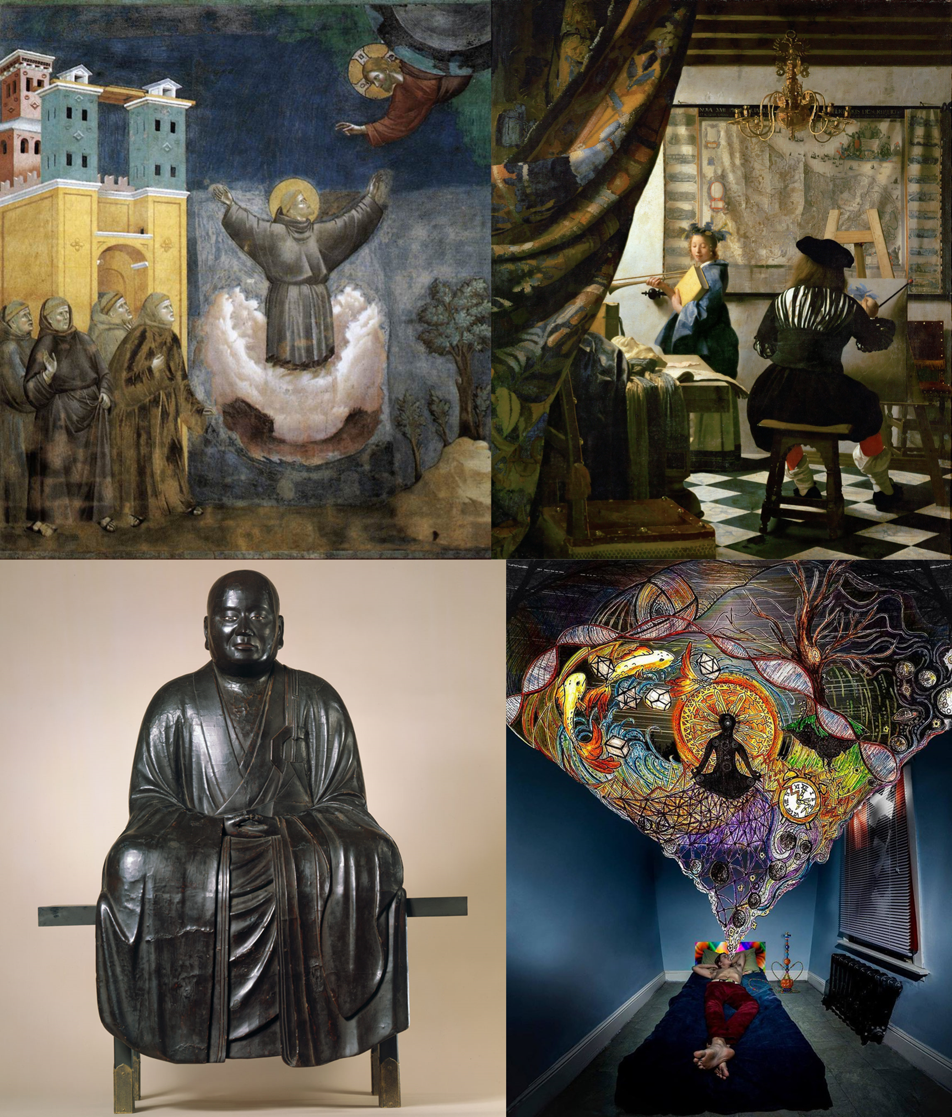
Giotto, The Ecstasy of St. Francis, around 1300, fresco, Basilica of St. Francis, Assisi, Italy
Johannes Vermeer, The Art of Painting, 1665-1668, oil on canvas, Kunsthistorisches Museum, Vienna
Portrait of a Zen Master, 15th century Muromachi Japan, lacquer on wood with inlaid crystal eyes, Metropolitan Museum, New York
It's typical of these false priests of fake truth that they have the one master theory that gives them the secret but oddly easily to master key to reality. Mystical theology, artistic creativity, meditative states, and acid trips are empirically and theoretically not the same thing.


This is the critical inversion. Seeking the truth starts with empirical knowledge - the small-t truth of what can be determined objectively. Accepting what is real with logic and sincerity will point towards larger capital-T Truth, if only as seen through a fog or a blurry window. We refer to these as "higher" truths because it is a familiar metaphor to make metaphysical ideas easier to conceptualize for readers who aren't accustomed to them. It isn't a physical direction as much as beyond us, in the sense that ultimate truth - the true nature of reality, the meaning of life, being, etc. - can't be perceived by limited subjective humans.


It is important to understand the self and its impulses. Deceivers like to works off a distorted truth - what the Band calls a philosophical bait and switch is based on taking something temporary and conditional and pretending it is a universal law. Self-understanding is where the truth-seeker's journey starts, because a commitment to following truth or logos is an inner one - it starts with the personal. But that's the start. 


Your understanding of yourself should grow with your understanding of reality. It's a cyclical process, where the commitment to truth builds external knowledge, which is then applied back inward, deepening the understanding of the self and it's place in the logos of the world. It never really ends, because ultimate truth is beyond our grasp.


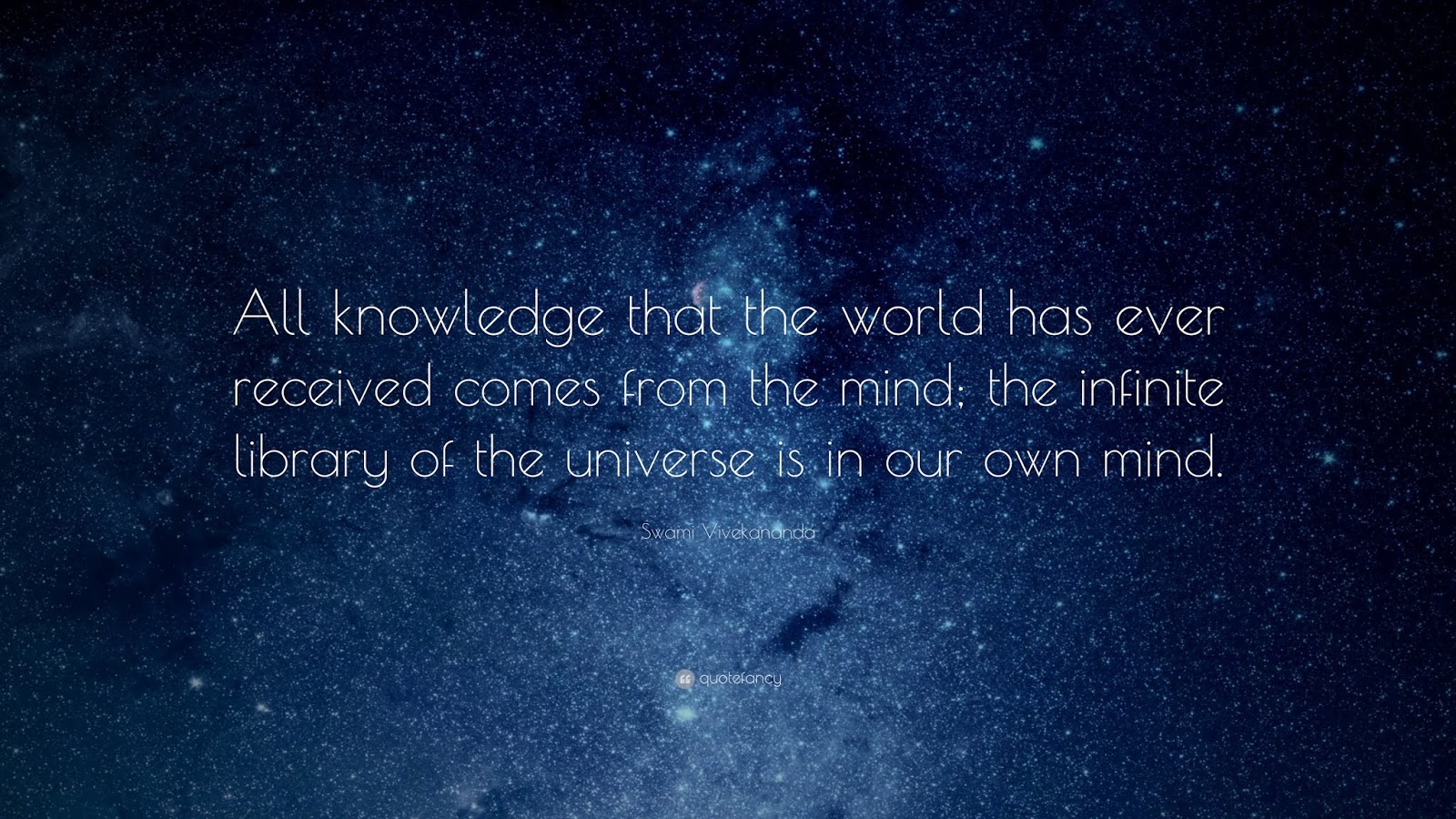
It is the complete opposite to the notion that our knowledge of the world is produced within our minds. This is the sort of ignorant fridge-magnet version of "Eastern spirituality" that psychedelic and psychological occultists love. The Swami didn't exactly scream logos, but thought wasn't this dim.


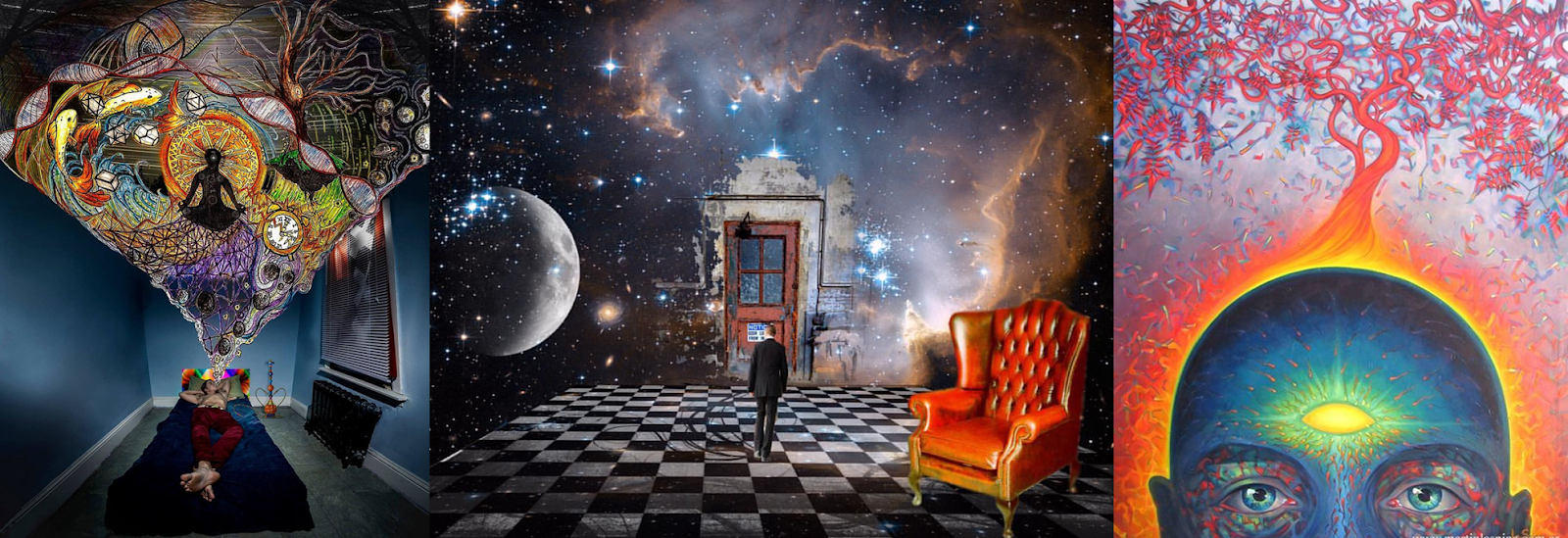
And Magic Science Man. Starry backgrounds don't make things profound. What makes thing profound is truth.


And Magic Science Man again. Perhaps a gratuitous shot, but the perverse inversion of modern "culture" is apparent in the absurdity of their heroes. Imagine thinking that this media phantom is an authority on anything. This is the result of progressive abandonment of truth.


To generalize, Freud's brand of secular transcendence takes something metaphysical - the unobtainable goal of transcendent Truth - and transforms it into a material mental process with no credible empirical evidence. The "no evidence" is especially important, because it establishes the foundation of a new Science! that wasn't based on data or logic. He can set the terms of a fake transcendence that can be whatever he wants because it's fake. Don't get caught up in the historical specifics of Freud's life - personally he was a degenerate piece of shit, but the offshoots of his idea have done incalculable harm to civilization. What matters is the general inversion - pretending truth is in the subconscious. This is what carries over after other charlatans replace his fake specifics with fake specifics of their own.

The traditional occult became a fake specific in an overt way through the ravings of Carl Jung - a perennial favorite with hidden wisdom charlatans.


Jung applied the idea that higher truth comes from objectively non-existent unconscious properties to humanity as a whole - postulating a supernatural collective unconscious that was also objectively non-existent. Empirical non-reality was no obstacle to Jung, and he dreamed up all sorts of examples of human nature that his non-existent magic could account for.


Remember the process: make something up, pick symbols and references that seem deep, pretend that the made-up thing "explains" them. For Jung it was blue fairies on electric unicorns speeding through imaginary archetypal forms that pass through the collective unconscious aether and determine our natures.


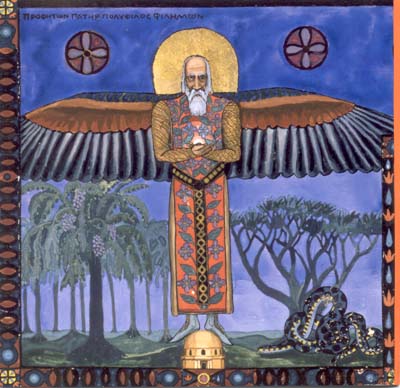
Jung was unable to keep this nonsense "all in the mind" or minds, to be collectively correct. He moved on to actual occult practices and watered-down Eastern mysticism - is there a difference? - by linking the collective unconscious the the traditional supernatural.

Philomon, from Jung's Red Book

This was the mystical dream guide that took led Jung to deeper truth, including by automatic writing. 


If this seems convoluted, it is. It's a great example of how imaginary mystical nonsense gets built off of older nonsense, like geological strata. Each new spray of symbols adds another layer of "meaning" to the mess and piles up the illusion of "depth". 'This fraud is quoting a fraud from Babylon! They must be right!' The appeal to human vanity in it all is enormous because it lets man posture as the ultimate source of knowledge in a way even Enlightenment rationalists couldn't. Everything - religion, morality, human nature, etc - is all in the mind.


This is why it is so susceptible to luciferianism. The subconscious is a descriptive category of human behavior. Higher truth is a supernatural one. Swapping them is conceptually the same thing as claiming to be your own god, if the god is a secret inner one. 


Psychedelic frauds used the fake truths built out from the psychoanalytic notion of subconscious to claim that hallucinogens have magical powers. Only now, it's not hypnosis, meditation, or automatism opening the secret inner key to higher truth, it's a drug.


John Collier, Priestess of Delphi, 1891

Remember the Oracle and her vapors? There were historical patterns for the psychedelic occultists to misrepresent. The Oracle fit the traditional understanding of the occult because she was possessed by a supernatural entity. Psychology converts the supernatural to the biological, calling things like this delusions or hallucinations that are all in the mind. But this is an insufficient explanation, so occult psychology brings the supernatural back in. Not in the old forms of the god Apollo or the Christian demons, but a... third way. 

Instead of delusions, the visions are tapping into timeless archetypes. From here, it is a short step to say that it is the drug that creates the altered state that makes the whole process possible.


Now that we know we are dealing with, it is a good spot to wrap. This post has looked at the tangle of themes and ideas that went into the psychedelic occult, and how they bring chemistry, psychology and the supernatural together. Adding drugs just extends the pattern. But they also change it in ways that have big cultural consequences. The next post will look at how the drugs make it cool.


Most Popular Posts